
Today, we continue to explore the mysteries of paraphilia. The topic today is BDSM or 'kinky sex'.
The term BDSM describes the activities between consenting partners that contain sadistic and masochistic elements, which involve the inflicting or receipt of pain to derive pleasure. It includes bondage and discipline (B&D), dominance and submission (D&S) and sadism and masochism (S&M).
The term 'vanilla' refers to normative ('non-kinky') sex and relationships, the vanilla world being mainstream society outside of the BDSM subculture. The term comes from vanilla ice cream, which is considered the 'default' flavour.
Many people think that BDSM practitioners are mentally challenged, but The Diagnostic and Statistical Manual of Mental Disorder (DSM-IV) asserts, "The fantasies, sexual urges, or behaviours" must "cause clinically significant distress or impairment in social, occupational, or other important areas of functioning" and the activity must be the sole means of sexual gratification for a period of six months. It might also involve violation of consent for sexual sadism or masochism to be considered a mental disorder.
Interestingly, BDSM practitioners are usually well educated, wealthy yuppies aged 20-40.
What is a BDSM scene?

BDSM participants often refer to their activity as 'play', with an individual play session called a 'scene'. In these 'scenes', one of the parties voluntarily gives up control or authority.
In general, it must be possible for the consenting partner to withdraw his or her consent at any time; for example, by using a safe word that was agreed on in advance.
Bondage/discipline

In the practice of bondage and discipline, physical restriction and psychological restraint are used to facilitate obedience, servitude, training and punishment. Studies among BDSM practitioners in the United States have shown that about half of all men find the idea of bondage to be erotic; many women do as well.
Typical activities are: Immobilisation, intricate Japanese rope bondage, mummification, binding the partner, tightly corseting the submissive, spreading the appendages and fastening them with chains to a St Andrew's cross or spreader bars.
The term 'discipline' describes the use of rules and punishment to control overt behaviour chaining, flagellation, public humiliation, isolation in cells and closets, kneeling, etc.
Dominance and submission
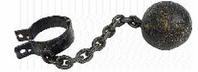
Dominance and submission is a set of behaviours, customs and rituals relating to the giving and accepting of dominance of one individual over another in an erotic or lifestyle context. Those who take the superior position are called dominants, while those who take the subordinate position are called submissives.
A switch is an individual who plays either role. Two switches together may negotiate and exchange roles several times in a session.
'Dominatrix' is a term usually reserved for a female professional dominant. Some people maintain a special room or area called a dungeon, which contains special equipment (shackles, handcuffs, whips, and spanking benches or a Berkley horse, for example) or they may visit a BDSM club that maintains such facilities.
D&S activities take many forms and may include:
Spanking, domestic servitude or consensual slavery, enforced chastity of the submissive, erotic humiliation, verbal humiliation, fetishes - such as foot/shoe/boot worship, animal play.
Sadomasochism

Individuals often obtain sexual excitement from both sadistic and masochistic activities.
The terms 'sadism' and 'masochism' are derived from the names of the Marquis de Sade and Leopold von Sacher-Masoch, based on the content of the authors' works.
Sadomasochistic practices are also varied and may include:
abrasion, anal torture, fire play, genitotorture, gunplay, impact play, knife play, caning, needle play, sensation play, ice play, nipple torture, wax play, branding, bruising, piercing, tattooing, hot oil, asphyxiation, ball stretching, biting, breast whipping, hairbrush spanking, hair pulling, water torture, etc.
The pleasure of pain
From what I have just described, it appears that a small subculture do derive pleasure from pain. The experts believe that painful stimuli cause the release of pleasure hormones such as endorphins, serotonin, melatonin, adrenaline and noradrenaline.
In 1987, Moser and Levitt conducted a study of 178 male and 47 female BSDM practitioners. The results revealed:
66.1 per cent enjoyed spanking
65.0 per cent enjoyed bondage
14.7 per cent enjoyed piercing
10.1 per cent enjoyed branding
6.8 per cent enjoyed tattooing
Common myths about BDSM:
Dominants are naturally cruel people.
Submissives are naturally weak-willed 'doormats'.
Submissives are attempting to relive childhood abuse.
Risks
BDSM can be dangerous, so practitioners must be advised of the following risks:
Top's disease, or the tendency for some dominants to develop a sense of infallibility or omnipotence.
Physically or mentally abusive dominant partner.
Dominant partners who violate the trust relationship by attempting to isolate the sub from society or monetarily exploit the sub.
Unstable dominant partners or subs who, through act or threat of calling public attention to the other's private life and their relationship, can cause financial or personal hardship.
Emotionally unstable or manipulative subs or dominant partners seeking more from the relationship than the other can give.
Some games are dangerous and can cause severe infection and death.
Many participants are emotionally traumatised after a session and will need aftercare.
Unsafe sex could lead to sexually transmitted infections.
If you are into BDSM, please remember the acronym SSC - safe, sane and consensual.
Dr Alverston Bailey is a medical doctor and immediate past president of the Medical Association of Jamaica. Send comments and questions to editor@gleanerjm.com or fax 922-6223.


















