
In Ricardo Smith's he(art) - inner-city artist needs break
Published: Monday | June 22, 2009 Comments 0
Paul H. Williams, Gleaner Writer
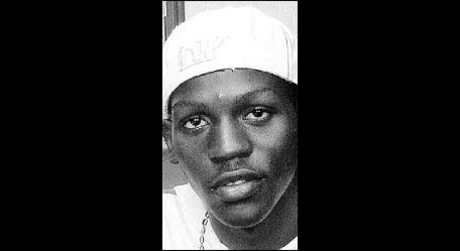
Smith
Two months away from attaining legal adulthood, Ricardo Smith is burdened and, having no one to turn to, he recently visited The Gleaner to tell His Story.
Central to his problem is his inability to help himself, his mother (who is not well) and a younger brother. Yet, he is a talented artist, a promising 'singjay' and an amateur songwriter.
Ricardo's primary concern is the well-being of his mother - the woman who, he said, has been going through a lifetime of physical and mental abuse, has been in and out of the hospital, is living in desperate conditions, and who cannot afford food and her medication. As such, he himself lives in some amount of torment and frustration.
Ricardo: "Mi go down the hospital the day before yesterday and mi see har, and mi even want to cry."
He cries at times, but that's all this youngster from Payne Land, St Andrew, can do for now. For, his heart is full of sadness.
Distinctive style
However, music is in his head. It is the medium which he hopes will transport him from the hardship that surrounds him. Regularly, he sings to himself and others, and would engage his friends in musical duels in his neighbourhood. This is one way of honing his craft. For when the break comes, Primeseeno, as he is called onstage, wants to be ready.
Ricardo: "Mi siddung and wonder how mi a go mek this through, deh wonder if mi can't meet some of those artiste fi mek them give me a buss."
And with his distinctive style, the music industry is for him to conquer. A house on the hill he wants for his mother, who is the subject of some of his songs. In one of them, he writes: "Mama, yuh know seh me afi love yuh/Mama, yuh know seh me afi hug yuh/Mama, yuh know seh me afi kiss yuh."
This from a young man whose journey has never been smooth, and to whom the demonstration of love is seldom shown. Brought up in an unstable family environment, he has witnessed domestic abuse and much strife. His mother told him that she used to sleep with him on the streets when he was a baby, just to escape the abuse.
His attendance at school was also erratic as he was beset by his own behavioural problems, thus moving from one boys' home to another. In addition to the cruelty he said he encountered at some of the homes (he has marks to show), his family's welfare was always on his mind, so he would run away from the homes to be with them. But he would go back to the misery and the chaos.
The bad memories are etched in his young mind, perhaps forever, as he spoke of them without any prompting.
"Most times mi a mek a chune, like mi mama chune dem, and mi jus a memba certain things, and mi just start write," he said.
The cadence of his voice betrayed the pain he feels, and that smile he gave when he said he had contemplated suicide was not a smile after all. It was just a momentary lightening of the load on his heart.
Away from harsh realities
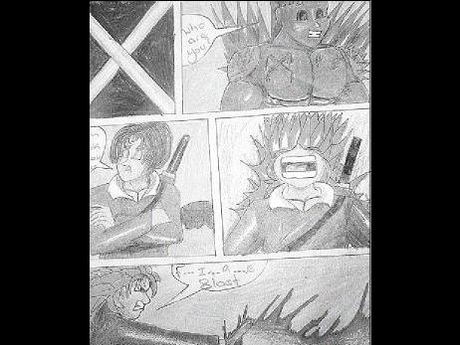
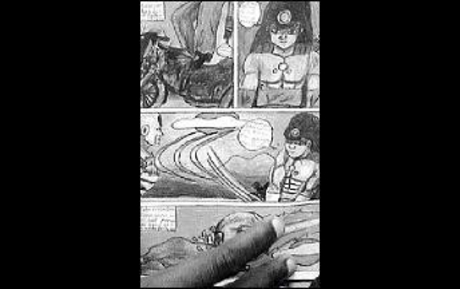
Sadness and pain aside, Ricardo can also draw well. His artwork speaks for itself. The lively characters and bright colours have brought his characters to life. The lines are clean and well formed, and the facial expressions are true to life. Cartoons and comics are his favourite, and he has even drawn his own story. He has been drawing for more than six years now, and he credits his friend, Jody, for initiating and guiding him.
Ricardo: "She used to say mi a write but mi nah mek nobody laugh inna it, so mi start draw dem way deh."
For Ricardo, art is not just a possible profession; it is a way of soothing himself, a world into which he delves to forget all the negativity that he encounters daily. It is his cocoon, away from his peers and the harsh realities of life. Because, somewhere along the way, he could have been sucked in by the wrong social dynamics, by more 'attractive' alternatives to music and art. By living in one of Kingston's toughest political garrisons, any game can play.
Payne Land's reputation for violence and crime is no secret. This, in itself, does not augur well for Ricardo, as people become suspicious when they learn of his address. But, the need to help his mother, to elevate himself, and his desire to make it big in art and music are paramount in his mind, and, as such, he has ignored the negative influences that were at one stage flirting with him. It takes strength of character to refuse to take up the inner cities' most common symbol of power.
Won't take up the gun
He recalled an incident when, "mi see some bad man pon the building and dem seh, 'Yow, yuh a go kill deh boy deh fi wi?' Mi a seh, 'Wah?' an' dem goh so and draw it out a dem waist and him a sey, 'Hold this!' ... Mi look pon it, an' shake mi head, an' walk off an' laugh, an' no tek it ... Cause mi no follow dem things deh. An' mi remember one time mi friend dead by one ... That a no de way out for me."
So, while Ricardo has no intention of getting involved in illegal activities, he's also not looking for arbitrary hand-outs. He wants work and the opportunity to ply his trades so that he can help his mother.
"Mi want to be around to help har ... Mi nah tek up that fi go do nothing stupid wid it," he declared, making reference to the gun. He's a promise that must not go to waste, and his 'wrong address' should not keep him fettered, for as a caged bird, all he can do right now is sing.
paul.williams@gleanerjm.com
A page from one of Ricardo Smith's comics.
Ricardo Smith shows off one of his comics. - photos by Paul H. Williams
The Gleaner reserves the right not to publish comments that may be deemed libelous, derogatory or indecent. Please keep comments short and precise. A maximum of 8 sentences should be the target. Longer responses/comments should be sent to "Letters of the Editor" using the feedback form provided.

- Gleaner Company Websites
- The Star
- Gleaner Classifieds
- Go Jamaica
- Hospitality Jamaica
- Global Jamaica
- Youthlink
- Voice UK
- Gleaner Company Websites
- Business Directory
- Restaurant Week
- Discover Jamaica
- Go Jamaica hosting
- Go Local
- Sports Jamaica
- diGJamaica

