

A visa may be revoked at any time and for any reason
Published: Tuesday | April 21, 2009

Walker-Huntington
Q: I was married to a Jamaican who is a citizen of the United States (US). He filed for me while I was there with him, and then came down for my interview here in Jamaica. I was denied the visa because I had overstayed in the US.
Now I need to know if I will be able to ever go back to the US. I am dating now and he happens to be an American-born. Should this man and I get married and he decides to file for me, will I still be denied the fact that I had once overstayed in the US?
Thanking you in advance.
J.D.
A: Anyone who overstays their period of admission to the US faces a bar to returning. When one is granted a non-immigrant visa at the United States Embassy, it is valid for a definite period, e.g. one year or 10 years, and may be for one entry or multiple entries. Upon admission to the US, the Customs and Border Protection officer assigns a period of time that the visitor may remain in the US, usually six months. It is not intended for the visitor to remain the entire six months.
A visa may be revoked at any time and for any reason. If you remain in the US for an extended period, even within the time allotted at the airport, you could lose your visa upon a return visit or during the renewal process.
If you stay in the United States for six months or more you will face a mandatory three-year bar to returning to the US and, if you overstay for a year or more, the mandatory bar is 10 years. These bars are triggered once you leave the US.
Even if you overstay less than six months, leave the US and attempt to return on a valid visa, you may be denied entry. During the renewal of a non-immigrant visa, a previous overstay can cause a denial.
However, if you enter the US lawfully, overstay and marry a US citizen, you are eligible to remain in the US and adjust (change) your status to that of a Lawful Permanent Resident (Green Card holder) without penalty - with limitations. Unfortunately, you apparently incorrectly filed your papers to be interviewed in Jamaica and left the US, thereby triggering the mandatory bar. You did not indicate how long you were in the US illegally and how long a bar you triggered.
If your mandatory bar has expired, you should have minimal problems returning to the US as a permanent resident. However, if your bar is still in effect, you and your new husband will have to qualify for a hardship waiver to cure your inadmissibility to allow you to return to the United States.
A hardship waiver acknowledges what you have done that makes you inadmissible to the United States and asks the US government to excuse what you did based on enumerated hardships to a qualifying relative - in this case a US citizen husband.
If you get married, your American-citizen husband should petition for an immigrant visa. Please, be very careful in completing all the forms and be truthful with all your answers. If a bar of inadmissibility is still in place in your case, when you go to the American embassy for your interview, you will be denied your green card. At that time, the interviewing officer will advise you of the waiver process.
To qualify for a waiver, a person generally has to show extreme hardship to a qualifying relative who is a lawful, permanent resident or United States citizen. In some cases, the standard is exceptional and unusual hardship. Each case has to be determined on its own merit and no two cases are alike. All examples of extreme hardship must be well documented for US Citizenship and Immigration Services in order to have a chance of being granted the waiver.
Dahlia A. Walker-Huntington, Esq. is a Jamaican-American attorney who practices law in Florida in the areas of Immigration, Family, Corporate & Personal-Injury Law. She is a mediator, arbitrator and Special Magistrate in Broward County, Florida. Send your questions and comments to: editor@gleanerjm.com or info@walkerhuntington.com.
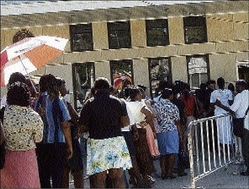
United States visa applicants gather in front of the new Embassy in Liguanea, St Andrew in this Gleaner file photo. - Norman Grindley/Deputy Chief Photographer