A trek of over 10,000 miles just for food
published:
Thursday | April 3, 2008
Emma Sharpe, Contributor
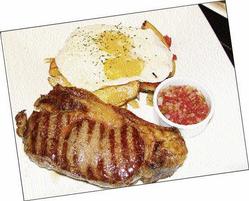
Rib eye with roast potatoes topped with fried eggs, served with red pepper and onion salsa. - Photos by Emma Sharpe
After 48 hours of planes, trains and automobiles, we finally arrived at Villa (pronounced Veejah) La Angostura, Argentina. It's a beautiful village, situated next to Lake Nahuel Huapi in the north west of Patagonia.
We stayed at a quaint hotel on the lake, three kilometres from town. Although it's been 14 years since studying Spanish, I was forced to converse in pigeon español, otherwise, we might have survived on cerveza (beer) alone! Not that that is so tragic, but the number of activities on offer in the area depended on us being fed a fair few calories. And we consumed a large amount of those!
Argentina is known for its 'cow meat'. Let me explain. Upon arriving at Buenos Aires airport, we noticed a café's menu offering 'Lomito vacuno completo' and 'Milanesa completa', translated into English as 'special cow tenderloin' and 'special breaded cow meat fillet', respectively! There are conflicting statistics claiming that the average Argentine eats 60kg (some say 70kg) of beef per person annually. That's somewhere between 132 and 154 pounds, which amounts to two and a half to three pounds of beef each week for every living person. Assuming that babies are gnawing on it as well!
We enjoyed the steaks, each of the eight times (in 10 days) cooked on a typical Argentine barbecue, which is designed so that the fat will run off and collect in a trough, or on the ground. The grill is constructed of V-shaped channels that are kept on a slant as the meat is cooked. If I had to choose the best steak, I think the 'manjar gaucho: ojo de bife con papas rœsticas a caballo y salsa criolla' from 'La Macarena' would be first. One juicy slab of rib eye with wedges of roast potatoes, topped with fried eggs (not horses as 'caballo' suggests!) and served with red pepper and onion salsa.
Wild boar
In the Lake district, however, there are delights to be found in other animals too. For instance, wild boar - we had a particularly tasty curry, subtle enough not to hide the rich flavour of the swine. Patagonians are rightly proud of their smoked version, which will often come on a platter with smoked deer and pickled vegetables. Imagine sitting on a deck overlooking a marina, feasting on these which are bursting with flavour and then tucking into a plate of freshly grilled river trout that is topped with sautéed mushrooms from the nearby woods. The Patagonian slow-roasted lamb was outrageously good.
Normally, all this food would send one's body into turmoil, but the horse riding, zip lining, mountain boarding, walking and white water rafting can only leave a person famished at the end of the day, so there's always room to squeeze in one of the outstanding desserts on offer. Sliding into autumn, apples and berries were heavily on the menu, with pies and crepes accompanied by cinnamon and cardamom ice creams, and 'Dulce de leche' served with practically everything!
One can't forget the wines, which ranged from a 2007 Cevantes Sauvignon Blanc to a Reserva 2005 Luigi Bosca Malbec, with several others in between, and beers like Quilmes, Epulafquen and Bersaglier. I'd advise that the real drinking is saved for the evenings, because once you've ploughed through a couple bottles, you'd be hard pressed to do anything but sleep. And after a full day of exercise, honestly you'll not want to do anything else!
Although we trekked a few furlongs more than 10,000 miles there and back, it was well worth it; just to get all that fabulous food!
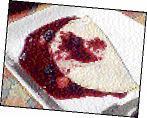
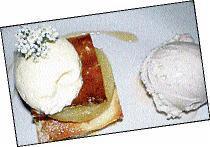
Left: Warm apple and cinnamon tart with cardamom ice cream. Right: Fruits of the forest crepe with vanilla ice cream.
DINING WITH EMMA RECIPE
Dulce de Leche
To make: Place one unopened tin of condensed milk in a pot. Cover with water and simmer for four hours, ensuring the water remains topped up. Remove tin and cool. Open and use in pies or crepes, and as a topping for ice cream, shortbread or toast with sliced bananas.