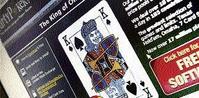
A computer screen displays an online gambling website. The European Union has demanded compensation from the United States for its illegal online gaming ban. - Reuters The European Union (EU) told the United States yesterday that it wanted compensation for a U.S. ban on foreign online gambling sites that does not comply with global trade rules.
British online gaming operators such as Sportingbet PLC and Leisure & Gaming PLC were forced to quit the profitable U.S. market last year when Washington stopped U.S. banks and credit-card companies from processing payments to online gambling businesses outside the country.
The decision closed off the most lucrative region in a market worth US$15.5 billion (€11.6 billion) last year. About half of the world's online gamblers are based in the United States.
But an EU official said the concessions Europe was looking for would likely be "commitments" to open up other trade sectors, meaning gambling sites would not win their way back into U.S. pockets.
"We need new concessions that would be equal with the benefits lost," he said, speaking on condition of anonymity because he is not authorised to be quoted by name in media reports.
Unfairly targeted
Initial negotiations would focus on measuring the loss to European businesses, he said, warning that talks would take some time.
The World Trade Organisation (WTO) ruled in December that the law unfairly targeted offshore casinos, telling the U.S. it could keep restrictions against sport betting in place if they were also applied to American businesses.
The EU - the world's largest consumer market - joins the tiny Caribbean nation of Antigua and Barbuda in seeking compensation.
The twin-island nation argued that online gambling had provided income for hundreds of its citizens and was helping to end its reliance on tourism, which was hurt by a series of hurricanes in the late 1990s.
After losing the case, the U.S. announced that it would take an unprecedented legal step to change the international commitments it made as part of a 1994 treaty regulating the trade in services among the 150 members of the WTO.
As a result, the U.S. declined to challenge the WTO ruling, because it says that its legal manoeuvre effectively ends the case.
U.S. lawmaker Barney Frank, the Democrat Congressman who chairs the committee that oversees financial services, introduced a bill in April that would reverse the Unlawful Internet Gambling Enforcement Act, but his plan faces long odds in Congress, and likely opposition from the Bush administration.
- AP


















