Sabrina Gordon, Business Reporter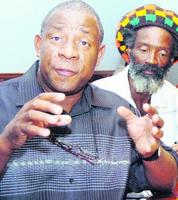
Derrick Simon
JAMAICA'S NEAR 5,900 coffee farmers are mostly without insurance coverage, more than two years after Dyoll's collapse.
The farmers have been attempting to woo a new provider, but with the risk associated with mountainside cultivation, so far, there are no takers.
Under Dyoll, some 500,000 boxes of coffee produced at the Mavis Bank, Wallenford, Moy Hall andother approved traders, were insured for US$1.25 per box under a scheme monitored by the trustees.
"This is a high-risk area and given the many disasters over the past three years, insurance companies are reluctant to do crop insurance and the premiums being looked at are heavy almost not affordable," said St. Clair Shirley, director general of the Coffee Insurance Trust.
"However, we are still shopping around to see if any will come in at the last minute," he told Wednesday Business.
In the meantime, the coffee farmers themselves are trying to sell to government a plan to self-insure, according to representative Derrick Simon, who told Wednesday Business, the proposal would require $60 million of public support to establish a fund.
"Presently, with the start of the hurricane season, if some form of insurance policy is not put in place, then farmers would be left to their own devices," said Simon.
Minister of Agriculture and Lands Roger Clarke is yet to reply to the proposal, but is considering it, said the coffee farmers' spokesman.
It is expected that the farmers would pay premiums to build the fund.
Shirley said the trustees and the state-owned Coffee Industry Broad (CIB) have approached several reinsurers and are awaiting their response.
Dyoll was taken over by regulators in early 2005 after it became clear the company could not cover the damage claims from policyholders in Jamaica and Cayman. Two receivers, in the two jurisdictions - John Lee in Jamaica and Ken Krys in Cayman - were appointed by the court to wind up the insurance business. Just this week, after months of negotiations and legal challenges, coffee farmers began receiving compensation.
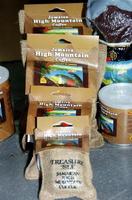
Some $70 million is being paid out to more than 3,000 farmers.
With the settlement of that issue, the farmers are again worrying about their exposure to the next big storm, with no new insurance scheme in place to take up the slack left by Dyoll.
The lack of coverage was raised as a concern at the Jamaica Agricultural Society's 112th annual general meeting last Thursday, given the heavy storms expected this hurricane season.
Without insurance, the sector's shelter would have to come from the public purse, but on Tuesday Agriculture Minister Roger Clarke, said assistance was not a given.
Last year, government gave $40 million of support to the coffee producers, but the level of assistance is not standard, but dependent on available resources.
"The ministry doesn't have the resources to act as a buffer for farmers in the event of a disaster," said Clarke, speaking with Wednesday Business at his Hope Gardens offices in Kingston.
Clarke, however, acknowledges the difficulty faced by the farmers in getting coverage, leaving open the possibility of financial help in the event of a catastrophe, but said it would be a decision of the executive.
Meantime, the CIB is in the field collecting and collating all the information relating to production, since Hurricane Ivan's 2004 decimation of crops, in preparation for an insurance tender placement.
"There is a level of difficulty in getting crop insurance though, a general reluctance right throughout the region to deal with this issue due to the vulnerability with hurricanes," said Clarke.
JAS president Senator Norman Grant, last week urged the CIB and trustees to publicly advertise for an insurance provider.
The new coverage, he said, should be of a compulsory nature where all farmers are insured and must contribute to the scheme.
He also called for increased protection for the smaller coffee growers.
sabrina.gordon@gleanerjm.com


















