John Myers Jr., Agriculture Coordinator
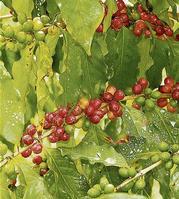
A coffee plant in full bloom in the Blue Mountains. -
Colin Hamilton/Freelance Photographer
As the regulations governing international trade continue to change rapidly, local exporters of coffee will now have to conform to stricter food quality control regulations as the main export markets tighten the noose on food safety regulations.
The latest of these changes has come from Japan, one of the main markets for Jamaican coffee, which now requires all imported coffee to conform to new pesticide residue regulations before being approved for consumption in that country. The new pesticide residue regulations by the Japanese became effective at the end of May.
Graham Dunkley, director-general of the Coffee Industry Board (CIB), explained that the new regulations now require the agency "to know what chemicals are being used in the country, what has been imported, what is present in the market, then you have to go to what (chemical) is used in this particular sector, how it is used and what measures are in place to mitigate against the possibility of contamination."
The CIB director-general, the head of the agency responsible for regulating the island's coffee industry, explained further that the new pesticide residue regulations mean that "If you get a reading above what they will accept, it means that your goods might be destroyed and you are going to go on a special monitoring procedure." Furthermore, he pointed out that in the event of a breach, the entire country and not the particular exporter, will be sanctioned.
Certifying coffee
Mr. Dunkley said the resulting changes would now increase the CIB's cost of certifying coffee for export. He said the CIB will now have to build a new laboratory to carry out pesticide residue tests. The facility is estimated to cost about $20 million. In the meantime, however, the CIB will have to depend mainly on private labs overseas to do the tests, which costs about US$4,000 per sample. As a result of the new regulations, processors will now be required to maintain detailed records of the chemicals used from start to finish.
Another food safety concern that the local industry will have to contend with is safeguarding against the occurrence of the cancer-causing substance referred to as Ochra-toxin A (OTA) in coffee. OTA is a myco-toxin that is believed to cause kidney damage. Although tests on the effect of the toxin are not yet conclusive, many countries, especially in the EU, are implementing precautionary steps.
Mr. Dunkley explained that OTA is found in coffee only when it is stored under improper conditions over an extended period. He said this was not a significant issue for the local industry.
This has come at a time when some local exporters and processors are struggling to comply with safety regulations set out under the European Union's (EU) Hazard Analysis Critical Control Points (HACCP) programme, which becomes effective July 2008 and the United States' Bio-Terrorism regulations, implemented in the aftermath of the September 11 terrorism attacks in 2001 to govern the importation of all foods coming into that country.


















