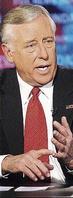
"You should not be relegated to poverty if you work hard and play by the rules," says House Majority Leader Steny Hoyer, as the bill to hike minimum wages is passed. - Reuters
The Democratic-controlled House voted Wednesday to increase the federal minimum wage to US$7.25 an hour, bringing America's lowest-paid workers a crucial step closer to their first raise in a decade.
The vote was 315-116, with more than 80 Republicans joining Democrats to pass it.
"You should not be relegated to poverty if you work hard and play by the rules," House Majority Leader Steny Hoyer (D-Md), said.
The bill was the second measure passed since Democrats took control of the House, ending more than a decade of Republican rule.
The measure, which now goes to the Senate, would raise the federal wage floor by US$2.10 from its current US$5.15 an hour in three steps over 26 months.
The Senate is expected to move quickly - perhaps in the next few weeks - on a similar bill. Business groups and some Republican lawmakers, however, hope they will be able to get some business-friendly provisions into the Senate package.
The last increase was in 1997, when President Clinton successfully prodded the GOP-controlled Congress to enact the increase. Republicans declined to approve another raise for the six years in which they held majorities in the House and Senate and President Bush was in the White House.
Organised labour and other supporters pitched the bill as badly needed assistance for the working poor.
Business groups and other critics said it could lead to higher prices for goods and services, force small companies to pink-slip existing workers or hire fewer new ones, and crimp profits.
statement
The White House issued a statement saying it opposed the bill because it "fails to provide relief to small businesses."
Senate Democratic leaders have already signalled they will accept changes designed to shield small businesses from adverse consequences of higher labour costs.
"This bill increases costs for mom-and-pop businesses," said Representative Steve Chabot (R-Ohio), contending the legislation doesn't do anything to help offset that burden.
Many businesses want the pot sweetened, perhaps by faster depreciation or other tax breaks or letting small businesses band together to buy health insurance for their workers.
"In America we can either have maximum opportunity or we can have minimum wages. We cannot have both," said Representative Jeb Hensarling (R-Texas).
The bill would raise the wage floor in three steps. It would go to US$5.85 an hour 60 days after signed into law by the president, to US$6.55 a year later and to US$7.25 a year after that.
frozen out
"For 10 years, the lowest-paid Americans have been frozen out. They have been working at a federal poverty wage, not a federal minimum wage," said Representative George Miller (D-California), author of the legislation.
Bush has said he supports a wage boost paired with "targeted tax and regulatory relief" to help businesses - which would have to pay for the higher labour costs - stay competitive.
The United States Labour Depart-ment says 479,000 workers paid by the hour earned exactly US$5.15 in 2005, the most recent estimate available.
national wage floor
The federal minimum wage is like a national wage floor, though some people can be paid less under certain circumstances. States can set minimum wages above the federal level; more than two dozen states plus the District of Columbia do.
People who are paid the minimum wage tend to be young - under age 25 - never married, more likely to be women, minorities and part-timers, according to a recent analysis of 2005 data by the Labor Department.
If the federal wage does rise in 26 months to US$7.25 an hour, about 5.6 million people - 4.0 per cent of the work force - who make less than that would be directly affected, according to the Economic Policy Institute, a liberal leaning group.
The group estimates that an additional 7.4 million workers would benefit indirectly as raising the floor would ripple through the work force.
Recent attempts to boost the federal minimum wage had failed when Republicans had control of Congress. But prospects changed after the November 7 midterm elections put Democrats in charge in both the House and Senate.
- AP
TAKEN FROM THE FINANCIAL GLEANER, FRIDAY, JANUARY 13, 2007