By Michael Reckord, Contributor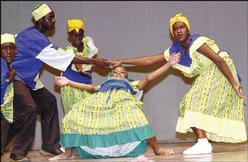
Clonmel Primary and Junior High from St Mary in performance at the National Finals for the Traditional Folk Forms. - Ian Allen/Staff Photographer
THE SECOND day of the Jamaica Cultural Development Commission's (JCDC) National Finals for Traditional Folk Forms might have been called 'Clonmel Day'.
Two performing groups from that St Mary community danced away with most of the awards handed out at the Little Theatre Friday afternoon.
The groups, students from Clonmel Primary and Junior High school and members of Clonmel Cultural Club, won awards for dances in the following categories: Best Ring Games/Ring Play, Best Quadrille Camp Style, Best Quadrille Ballroom, Best Quadrille Contra Style, Best Maypole, Best Dinki Mini, Best Bruckins Party, Best Gerreh, Best Revival and Best Jonkunnu.
The major (named) trophies they earned were The Kirby Doyle Award for Most Outstanding Traditional School group and the Rex Nettleford Award for Most Outstanding Youth Group. Mrs Jeannette Walters, the Clonmel groups' leader, won the Jay-Teens Dance Workshop award for Most Outstanding Traditional Teacher islandwide.
WINNINGS
Mrs Walters also won that trophy last year, while Clonmel Primary and Junior High took home the Kirby Doyle award for the fourth consecutive year.
The Imogene 'Queenie' Kennedy award for Most Outstanding Traditional Adult group went to Bethlehem Moravian College, which also won awards for Best Gerreh Seniors, Best Revival Seniors, and Best Nine Nite Seniors.
Other winning groups on Friday came from Seaforth Primary School (Best Kumina Juniors), Yallahs High School (Best Kumina Intermediates), Ebony Park HEART Academy (Best Dinki Mini Seniors), Islington Cultural Club (Best Dinki Mini Class 7), and Drews Avenue Primary School (Best Integrated Song & Dance Juniors and Best Jonkunnu Juniors).
The awards came at the end of a long day for adjudicators, Marjorie Whylie, Pansy Hassan and Hazel McClune, who saw 42 dance items. They had seen 66 the previous day.
In addition to the forms already mentioned, there were Tambu and Maroon dances. Generally, the items were full of colour (from the costumes of the dancers) and energy (most of the performers were teenagers).
HIGH STANDARD
Miss Whylie told The Gleaner that the overall standard was high, but she was disappointed that some groups had not heeded the advice given in training sessions and so showed no improvement as they progressed through the different levels of the JCDC competition.
She was happy to notice, she said, that children were taking an interest in traditional folk forms and doing so well. Her comment was an indication that the JCDC goal of "unearthing, developing and showcasing the best of Jamaican culture" was being achieved.
The high standard of Friday's finals, sponsored by Capital & Credit Merchant Bank Limited, was not surprising, for all the groups present had won Gold awards in earlier stages of the competition.
Before the awards were made, JCDC Traditional Folk Forms consultant, Joyce Campbell, handed out several bursaries (in the form of cheques) to teachers to attend folk music summer camps. The camps are conducted by the JCDC in collaboration with the University of the
West Indies Music unit, which is headed by Miss Whylie.
In her note of traditional folk forms in the printed programme for the Finals, Miss Campbell writes: "The JCDC is committed to the preservation of these cultural forms to ensure that our society realizes the fullness and richness of our heritage and culture and its importance to nation building and is always working to conceive ways on how to protect, preserve and maintain
sustainable development, knowing that they can also provide
the means for economic
opportunities."