Commentary - How facts got lynched in the US health care debate
Published: Friday | August 21, 2009
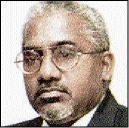
Wilberne Persaud, Financial Gleaner Columnist
It is true and acknowledged. We must return to the International Monetary Fund.
Yet, pressing as our problems of fiscal imbalance must be, we are still likely to and indeed should, find time to pay at least minimal attention to the current attempt by the administration of United States president Barack Obama and Democratic representatives to secure a health care reform programme to bring the more than 40 million uninsured US citizens into the health insurance loop.
The 'fight' as stakeholders and protagonists describe it, has turned bitter.
With lines drawn in the sand, analogous references to terms normally reserved for combat strategies have become enhanced by protesters toting loaded handguns and even two assault rifles strapped across the back at a Presidential auditorium meeting.
These gun-packers claim exercise of second amendment rights.
Plain and simple truths, facts, are literally lynched in this fight.
What are some of these facts? The US health care system possesses some of the world's best and most advanced technologies - systems, machines and operators - available for interventionist healthcare delivery.
The country is home to a majority of cutting edge institutions dedicated to medical research in the universities and elsewhere. First-rate medical students and doctors flock to the country, many staying there to do research and practice.
Major hospitals resemble five star hotels rather than sick bays.
They don't predispose one's visitors to nausea from smells, sights and sounds. But a stay in one of these five star units does not avoid the fact that the patient is at a most vulnerable moment in life.
Tests abound. Many are done, some feel, for two perverse reasons: to avoid litigation and generate profits.
Health insurance companies have consistently done very well on the NYSE.
This week their share prices climbed as the idea of an available competing public option - a government provided service - seems to have retreated.
Health care costs on a per capita basis in the US are more than that of every other country in the world. Debts incurred to cover health care costs are the principal cause of bankruptcy.
The US infant mortality rate is higher than the entire Organisation for Economic Cooperation and Development (OECD) - a grouping of developed industrialised countries.
The Institute of Medicine, an arm of the National Academy of Sciences indicates that the US is the "only wealthy industrialised nation that does not ensure that all citizens have coverage", that is, some kind of guaranteed facility for health care.
In a 2000 report the World Health Organisation ranked the US as having the highest cost, while being only 72nd among a group of 191 countries in terms of the overall health level of the population. These are mind-boggling numbers.
Because of the way health care is organised, employers pay for insurance coverage - non-taxed - individuals can buy coverage as well. So even though people view themselves as having cover, health insurance companies view payment of health care claims as a loss.
Indeed Wendell Potter, who worked for CIGNA a health insurance provider, gave us a window on operations. There's a measure he says, of "profitability that investors look to, and it's called a medical loss ratio. And it's unique to the health insurance industry. And by medical loss ratio, I mean that it's a measure that tells investors or anyone else how much of a premium dollar is used by the insurance company to actually pay medical claims."
As this number gets smaller, health insurance stock prices rise, Wall Street is pleased. The stories are myriad of the hell patients endure in seeking care when their insurance company denies it.
Potter had his conversion moment when he went to observe a 'health care expedition'. On holiday, he came across the advert in his local newspaper. He related it to Bill Moyers on PBS, still apparently in shocked disbelief:
The expedition was "being held at a Wise County Fairground. I took my camera. I took some pictures. It was a very cloudy, misty day, it was raining that day, and I walked through the fairground gates. And I didn't know what to expect. I just assumed that it would be, you know, like a health - booths set up and people just getting their blood pressure checked and things like that. But what I saw were doctors who were set up to provide care in animal stalls.
Or they'd erected tents, to care for people. I mean, there was no privacy. In some cases - and I've got some pictures of people being treated on gurneys, on rain-soaked pavement. And I saw people lined up, standing in line or sitting in these long, long lines, waiting to get care. People drove from South Carolina and Georgia and Kentucky, Tennessee - all over the region, because they knew that this was being done. A lot of them heard about it from word of mouth."
This is reminiscent of Doctors Without Borders in a very poor third world country. An event such as this was replicated last week as 1,500 tickets were given to people camped out in Inglewood, California, their only chance for medical services like eye examination, mammograms, dental procedures and X-rays all administered by volunteer doctors and nurses.
Needless to say the event was overcrowded and overburdened.
Apart from fairness and ideas of the good society, medical care costs are set to make the US economy uncompetitive in short shrift. Yet Sarah Palin, former Republican vice presidential nominee and others of high rank in US politics are able to describe as "death panels" the provision for end of life consultations with doctors paid for by government. This provision, many years on the books, was actually first proposed by a Republican.
Health insurance lobbyists and advertisers amplify such untruths to scare seniors who come to believe the Obama administration is about to "kill granny" and euthaniSe the infirm.
For commerce, US law regarding truth in advertising is robust and faithfully enforced. The US Federal Trade Commission which enforces truth-in-advertising laws insists that: "Advertising must be truthful and non-deceptive; Advertisers must have evidence to back up their claims; Advertisements cannot be unfair."
It is amazing to me that on such a fundamental issue, these very same laws do not hold. Freedom of expression presumes responsibilities even if empathy and decency cannot be legislated.
wilbe65@yahoo.com