'No smarter investment in troubled times' - State and private sector urged to invest in women and girls
Published: Tuesday | July 21, 2009
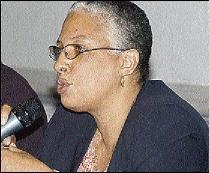
Campbell-Forrester
State and private-sector leaders have been urged to protect the interests of Jamaica's women and girls because of those groups' perceived susceptibility to greater hardship during economic recessions.
Dr Sheila Campbell-Forrester, chief medical officer in the Ministry of Health, said the erosion of financial independence threatened to have a ripple effect on the most vulnerable groups in families.
"They (women) tend to face more job cuts, girls are generally the ones who are forced to stop attending school and so their potential for future income is reduced," Campbell-Forrester argued.
She was speaking at a media sensitisation workshop on population and development issues hosted by the United Nations Population Fund and the Planning Institute of Jamaica at the Terra Nova Hotel last Tuesday.
Increased risks
The chief medical officer pointed out that, when financial resources to health systems shrunk, the probability of risks associated with child and maternal health are increased. She said young women, particularly adolescents, and their male counterparts, must come to understand that economics plays a great role in providing for a child.
Turning to social determinants which impact health and development, Campbell-Forrester cited Jamaica's vulnerability to exogenous shocks, pointing out that it is estimated that the current global crisis could push 200 million people worldwide back into poverty.
She highlighted two particular initiatives that the Government has successfully undertaken to cushion the most vulnerable against these shocks - the Programme of Advancement Through Health and Education and the National Health Fund. Campbell Forrester highlighted that through these programmes, which are components of the national poverty eradication programme, the country's poverty rate had declined from 18.7 per cent in 2000 to the current 9.9 per cent.
Affordable access
"These, along with the abolition of (hospital) user fees policy, put in place over a year ago, are geared at ensuring that the very poor can have access to affordable and quality health care, affordable medication and a social safety net. A number of persons have reaped many benefits so far, as a result of these initiatives," she said.
In his World Population Day message posted on the UNFPA website, Executive Director Thoraya Ahmed Obaid called on all leaders to make the health and rights of women a political and development priority.