John Myers Jr, Senior Staff Reporter
Derrick Simon, spokesman for coffee farmers, says the group has asked Government for $60 million to establish an insurance fund.
Coffee has escaped significant damage so far this storm season and production of Jamaica's premium-branded Blue Mountain coffee for this year's crop is projected to increase, according to preliminary assessments of the sector.
Last year, Jamaica produced 270,000 boxes, or 16,200 tonnes of premium beans.
Assessments by the Ministry of Agriculture suggest that the industry overall will lose about six per cent of the current year's crop, at an estimated cost of $108 million.
"We are certainly not complete in carrying that through, but initial indication is that the damage is not as serious as it might have been when compared with (Hurricane) Ivan," said Derrick Simon, president of the All-Island Coffee Growers' Association (AICGA).
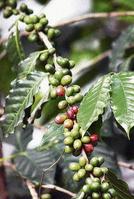
He was supported by Sylvan Ferris, a coffee farmer at Bethel Gap in the Blue Mountains, one of the main areas for growing coffee.
Ferris said he and the other farmers around his community did not suffer much damage.
But with no crop insurance and the lack of proper infrastructure to support the growing of one of the world's most-sought-after hot beverages, the frequent impact of storms - six in as many years - has begun to threaten the industry.
Simon said discussions on self-insurance have been ongoing, but those talks are still at the initial stages. Prior to Hurricane Ivan, coffee farmers had the protection of crop insurance from Dyoll, but that company has since gone bankrupt.
fund settlement
The liquidators of Dyoll and the trustees of the Coffee Insurance Fund have settled for 80 per cent of a US$3.2 million claim.
But niggling issues over farmers' eligibility and claim amounts are yet to be fully resolved.
Figures from the Coffee Industry Board (CIB) - the arm of government responsible for regulating coffee production in Jamaica - show that the amount of coffee berries passing the quality test for export has dropped by more than half, from a high of 48 per cent in 2001, to 23 per cent in 2006.
Only berries that pass the stringent quality test administered by the CIB are exported.
"The greatest challenge that is faced by the coffee industry right now is the accumulated effect of several disasters over the past six or seven years," Simon pointed out. "Each time you attempt to recover and to rehabilitate the properties, you're hit with another hurricane," he said.
accumulative damage
"The accumulative damage over the years seriously affected the coffee industry and the farmers as a whole, and their potential to recover is more and more diminished each year, to the point where I now think that we are down in terms of cherry- coffee production in the region of 20 per cent, and maybe up to 30 per cent, which is significant," the AICGA president stated.
He says this is worsened by the fact that many farmers have abandoned their properties out of frustration because the frequency of natural disasters has caused many to fall on hard times and, therefore, unable to resuscitate their holdings.
The number of acreages under Blue Mountain coffee production has fallen from about 10,000 acres before Hurricane Ivan in 2004, to about 6,000 acres now.
"This year, I think that we are going to have a shortfall in terms of our obligation and what is consistent production for us in the Blue Mountains," said Simon. He estimates that production of Blue Mountain coffee will be in the region of 320,000 boxes.
President of the Jamaica Agricultural Society, Senator Norman Grant, said the original projection for this crop was over 400,000 boxes.
refusal of buyers
Simon is also dissatisfied with the refusal of the buyers - mainly Japan - to increase the price that farmers get for the unprocessed beans, given the challenges being faced by the Blue Mountain coffee growers.
"The price for coffee paid by Japan is not what we would have liked it to be, taking into consideration that the cost of inputs has gone up over 200 per cent over the past couple of years," he said.
Farmers of Blue Mountain coffee now get up to $3,400 per box before the deduction of a mandatory Coffee Industry cess of $91 per box.
But with the cost to produce that same box of coffee running up to 80 per cent of that price for the most efficient farmers, the coffee farmers' representative said the current arrangement was unprofitable for his constituents, who have to navigate bad roads and punishing terrain to bring their produce to market.
The Agriculture Ministry said it was now focusing on clearing access roads to allow for a more comprehensive assessment, as well as to allow for the harvesting of ripe coffee berries.
The harvesting season began August 1.
john.myers@gleanerjm.com