Paul Messam, Gleaner Writer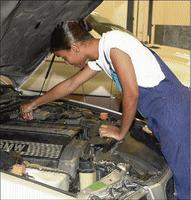
Vehicle checks not only keep you car running efficiently, but also help to guarantee your safety on the road. - File
A pre-trip inspection, or what some persons term a 'walk-around check', is recommended by auto mechanics, especially if you are embarking on a long journey or have had your vehicle parked for a long time.
Eugene Greene, driving instructor, advises a daily check.
"It is a good habit to check your vehicle on a daily basis to ensure that all is well before venturing into the sea of traffic," he said.
Comfortable feel
The driver should feel comfortable and well acquainted with the controls.
According to Greene, there is really no excuse for having to wiggle the rear-view mirror into adjustment while driving along, or finding out at the end of the driveway or at the first intersection that the brakes need fluid.
"Both the driver and the car must be in a state of readiness before the journey begins," he said.
Other things to check are:
The water level of the battery; the terminals should be clean of corrosion.
The tyres - for cuts, nails, excessive or uneven wear and proper inflation; gasolene, engine oil and coolant levels.
Automatic transmission fluid level with the engine running and the car in neutral. Top up these fuel levels, if necessary.
Check also the horn, windshield wipers and inside and outside mirrors to ensure they work.
Check the parking brake tension; the radiator coolant level, fan belt, radiator hoses and hose connections.
Another check to make is the muffler and tailpipe for leaks.
Before hitting road
Once the engine is running, the ammeter and oil pressure gauges or warning lights should be checked to be absolutely sure that they are not malfunctioning.
The rear-view mirror should be adjusted, and the seat as well, to provide the best driving position. The brakes should be pumped once or twice to ensure that they are in working order.
"If the driver is starting at night," according to Greene, "the lights should be on and in the desired high or low beam."
Once on the road, the driver should check the instrument panel every five minutes. However, it is not safe to try it when rounding a curve or approaching an intersection.
Evasive tactics
The safe driver tries to stay ahead of the situation at all times, and as noted by Dr Hame Persaud, a psychologist, "He projects his thoughts to a point where he can ready himself for dangerous situations before they arrive.
"If he spots a motor car at the side of the road, he immediately begins to mentally thumb through the various evasive tactics he might take, should that car do the unexpected."


















