Emma Dalton-Brown, Contributor
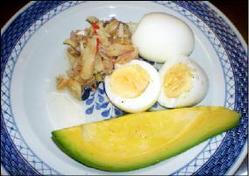
Perfect picnic food - flaked saltfish, avocado and boiled eggs
What's the big deal with the little oval-shape food that is produced by hens? At around 70 calories for the average one, how significant is an egg in our diet? Very, as it turns out!
Eggs are nutrient-dense, providing us with an excellent source of choline: maintains the structure of brain cell membranes, is a key component in relaying messages from the brain to the muscles, aids foetal brain development, and helps to break down homocysteine, which is an amino acid in the blood that may be associated with an increased risk of heart disease. Eggs also contain essential amino acids that we need, in almost a perfect pattern.
Contrary to what people tend to believe, the yolk provides nearly half of an egg's protein, as well as good sources of lutein and zeaxanthin (both are associated with keeping your eyes healthy), folate, vitamins A, D, E, B6 and B12, and healthy monounsaturated and polyunsaturated fats. Eating two eggs per day would give us one quarter of our daily requirement of protein, and a pregnant woman - half of the choline she ought to be consuming. That's fairly impressive (www.incredibleegg.org).
Eating eggs for breakfast every day - fried, boiled, scrambled or poached, over toast, can get rather boring. And, if you do not want to be consuming sweet things made with eggs, like cakes and muffins, you might find yourself with half a tray of them spoiling in your fridge.
The solution to this is to use these eggs for lunch and dinner as well. For the last week, I have not cooked one meal without them. I've experimented with different kinds of crustless quiche, savoury soufflés, egg-and-fish pies, kedgeree (egg, fish and rice), and many more, including a delicious picnic combination of flaked saltfish, avocado, eggs and hard-dough bread.
As sceptical as you may be about eggs, they do satisfy hunger, build muscle strength, provide lots of energy and do not cause heart disease. In fact, they are egg-xactly what we need in our diet.
Crustless Callaloo and Goat Cheese Quiche
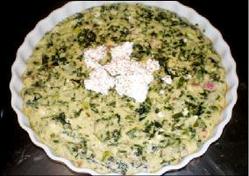
Crustless callaloo and goat cheese quiche.
1/2 oz butter
1/2 onion, chopped
1/2 large bunch of callaloo, chopped, cooked and well drained
Fresh nutmeg
3fl oz heavy cream
3fl oz cow's milk
3 eggs
3 scallion, finely sliced
Salt and black pepper
5oz soft goat cheese
METHOD
1. Pre-heat the oven 300F.
2. Heat the butter in a frying pan and gently cook the onion until soft.
3. Stir in the callaloo then grater fresh nutmeg into it.
4. Mix the cream, milk, eggs, scallion and 4oz of goat cheese in a large bowl. Stir in the callaloo and season well with salt and pepper.
5. Grease a pie dish with butter and pour the mixture in. Bake for 20 minutes.
6. Remove from oven, top with remaining goat cheese and bake another five minutes until just firm to the touch. Serve hot or cold.
Cheese Soufflé - serves 2-3
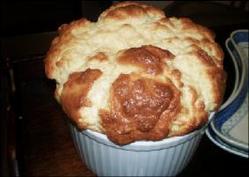
Cheese soufflé
2 1/2 oz butter
2oz flour
1/4 tsp paprika
2tsps Dijon mustard
2 cups milk
1 1/2 cups of grated cheddar cheese
1/2 cup of grated parmesan
Salt and black pepper
4 eggs
METHOD
1. Melt the butter in a pot, stir in the flour, paprika and mustard and cook for one minute.
2. Add the milk, stirring constantly with a hand whisk until the mixture is thick.
3. Remove from the heat, mix in the cheese and season well with salt and pepper. Divide the mixture into two, pouring one half into a lidded plastic container for freezing (use at a later date with four eggs), and leave the other half in the pot.
4. Preheat the oven 400F. Grease a six-inch soufflé dish with butter. Separate the eggs. Mix the yolks with the mixture in the pot. Whisk the egg whites until stiff, stir in one large spoon to 'let down' the mixture.
5. Gently fold in the remaining whites. Pour into the soufflé dish, run the tip of your finger around the top of the mixture to form a 'hat', and bake for 25 minutes until well-risen and golden. Serve immediately.
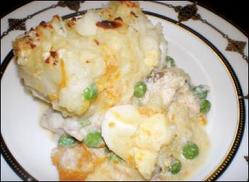
A portion of egg-and-fish pie. - photos by Emma Sharp


















