Daraine Luton, Staff Reporter
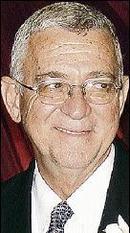
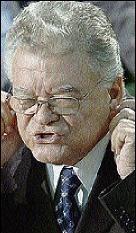
Left: Thwaites says EPA could reshackle Jamaica's economy. Right: Samuda has called PNP criticisms the views of "sanitised socialists".
PARLIAMENT ON Tuesday gave the Government the green light to sign an Eco-nomic Partnership Agreement (EPA) with the European Union (EU).
This is a move which could see the country giving up close to nine billion dollars in tariffs over the next 25 years while gaining full access to markets in the EU.
Prime Minister Bruce Golding said signing the agreement would "signal to the world, that we are ready to stand on our own and fight our way into the future".
A tentative date has been set for the agreement to be signed later this month, but the specifics have not been released.
The EPA represents a scheme to create a free-trade area between the European Union and Caribbean states.
Caribbean signatories are compelled to provide duty-free access to their markets while enjoying duty-free access to the EU.
Protected market
However, Jamaica and other CARIFORUM countries - Caribbean Community states and the Dominican Republic - will have approximately 13 per cent of their market protected.
For the remaining 87 per cent, governments are barred from charging tariffs on goods from the EU.
Over time, goods from Europe, including motor vehicles, would no longer attract import duties at Jamaica's ports. Golding said he wanted to include motor vehicles on the exemption list but was unsuccessful. He said the country would make up for lost revenue at the usage end.
Foreign Affairs Minister Dr Kenneth Baugh told Parliament that Jamaica had an exit strategy if Europe failed to deliver on its end of the bargain.
"We have negotiated an exit clause in the EPA, set out in article 244.3. This takes effect six months after notification," Baugh related.
The opposition People's National Party (PNP) has objected to sections of the EPA, with most criticisms levelled at the Most Favoured Nation (MFN) clause.
"Mr Speaker, the proposed MFN clause provides that CARIFORUM must notify the EU of all more favourable concessions granted to third countries, thereby giving the EU the right to cherry-pick the concessions that they view as being beneficial to it," Anthony Hylton, the opposition spokes-man on foreign affairs and foreign trade, said.
He added: "The Opposition remains steadfast in its view that Jamaica and CARIFORUM should not provide a stick for the EU with which to beat Africa."
Ronald Thwaites, another opposition MP, said the EPA was not a development instrument and cautioned the Government against rushing to sign the pact. He argued that Jamaicans were mostly unaware of the provisions in the proposed agreement.
"We should be very cautious ... . We may be unwittingly partici-pating in the reshackling of our economic freedom," Thwaites said.
Dismissing claims
However, Clive Mullings and Karl Samuda, who spoke for the governing Jamaica Labour Party (JLP), were strident in dismissing the PNP's claims.
Samuda argued that some of the views of the Opposition were those of "sanitised socialists" as he established a platform for Golding who was forceful in his support for the EPA.
Golding, who had once described as mendicancy, the beha-viour of those opposed to the EPA, delivered even more caustic criticism on Tuesday.
"I was wrong," the prime minister said sarcastically, "we are like the guy at the stop light who, if you don't let off money, him cuss."
According to Golding, Jamaica exports $33 billion worth of goods to Europe yearly and imports $25 billion. He said that $1.8 billion in duties and tariffs were collected yearly by the Government on imports, which represents 0.2 per cent of the country's total tax revenue.
Walked out
The PNP, which walked out on the vote, had suggested an amendment to the proposed MFN clause that would require the Government of Jamaica to lobby CARIFORUM to seek the exclu-sion of the definition of 'major trading economy'.
Golding and some regional leaders have been dismissive of critics who have urged regional governments to renegotiate the EPA.
"Renegotiation is not on the cards. The point is that I can't think there is anybody who believes it's a perfect agreement," Barbados Prime Minister David Thompson told the Caribbean Media Corporation recently.
"Barbados has not said and we are not about to say that the EPA is perfect, but we think that it is something we can work with and that, in the circumstances, it is the best that could have been achieved in the negotiations which took over three years," he added.
daraine.luton@gleanerjm.com.