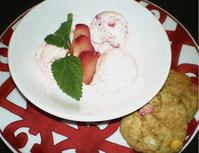
'Lite' ice cream? ContributedThe term 'lite' is not always the lovely signal to eat or drink to your heart's content that you may think it is. Lite has been used by manufacturers to mean many things. The label can mean that the product contains one-third fewer calories, or half the fat of the referenced food; or that the sodium content of an already low-fat, low-calorie food has been reduced by 50 per cent; or that the food is lighter in colour or texture.
Researchers note that the term is essentially meaningless unless you compare the item's nutrition information with its non-light counterpart.
In some cases, attempts to reduce one element can lead to the increase of another. Nutritionists note that two per cent fluid milk receives about a third of its calories from fat. Processes or formulations that decrease protein or nutritive carbohydrate levels may cause a relative increase in calories from fat.
retain calories from proteins
It is preferable to retain calories from proteins and carbohydrates (including sugar); they decrease the relative amount of calories contributed by fat.
'Light' or 'lite' is often associated with fat-reduced products, but they are now proposed by the United States Food and Drug Administration to be used only on foods with a one-third reduction in calories (and at least 40 less calories) per serving when compared to a standard product.
If a product gets more than 50 per cent of its calories from fat, the fat content must be half of what the standard is (a difficult proposition for many cheeses).
As noted at www.epigee.org, "Just because a label says that something is 'lite' that doesn't actually mean that it is good for you, just that it has less fat and calories than the original version of the food."
If the original was packed with fat and high in calories, chance are the 'lite' version will still have more fat and calories than you want to consume. Remember to read the nutritional information on the packaging, rather than trusting that if you see words like 'reduced fat' on the label you'll be getting a healthy alternative.
'lite' meals
The United States Food and Drug Administration notes that for meals to be described as low in anything, they should be:
120 calories or less per 100g
140 mg sodium or less per 100g
3g fat or less and no more than 30 per cent of calories from fat per 100g
1g saturated fat or less, and no more than 10 per cent calories from saturated fat per 100g or
20 mg cholesterol or less per 100g, and no more than 2g of saturated fat per 100g.
A low-fat food is not necessarily a low-calorie food, as is noted at www.iemily.com.
Companies tend to replace the fat with extra carbohydrates. Also, you may be tempted to eat a larger amount low-fat or low-calorie food because you may think that it is better for you. You may end up eating more calories and fat than you would have if you had eaten a smaller portion of the regular version.
As in all cases, if you are confused about what you should eat, it is best to get a nutritionist's or your doctor's advice.


















