GARDEN QUOTATION:When you have only two pennies left in the world, buy a loaf of bread with one, and a lily with the other.
- Chinese ProverbFew plants tolerate dry conditions as well as the more than 300 members of the sedum family (stonecrop). Most are perennials (there are a few annuals and biennials but they're seldom offered for sale except by collectors) and most of them are fully hardy in Jamaica.
In fact, there is a sedum for just about every situation in the garden.
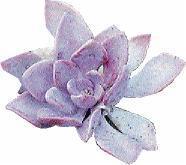
If it is colour that you are after, remember that this plant offers foliage in many shades of green, blue or purple, as well as several variegated variations. The foliage of some species transitions from one colour to another over the course of a single season. Flowers can be white, pink, lavender, purple, yellow, red, orange, bronze, or light green, and are typically described as 'starry'.
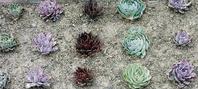
'assorted sedum'
If you want a choice of sizes, sedums exist as mat-forming ground covers that never grow taller than a couple of centimetres to two-metre-tall mounds.
There are so many sizes and colours that you'll often find them in garden centres labelled simply as 'assorted sedum'. Of the small-leaf types, what you see is true to what you get. The sedum you choose for a ground cover will stay that blue or that green. It will spread out but not up, and it will reward you with flowers during the late summer. Some of the low-growing varieties will bloom earlier, but the foliage remains attractive all season. The clumping sedums (including the purple-leafed 'Vera Jameson') are best cleaned up in late fall or early winter.
Sedums are succulents, characterised by fleshy leaves that store the water they need to grow on. Consequently, they are very well adapted to thrive with almost no additional water, even during summers such as the one we are gifted with here. They are actually very tough plants that accept whatever Mother Nature has to offer in the rainfall department - and they'll make do nicely if she decides to withhold rain entirely. They are not susceptible to diseases and few pests pay any attention to them.
Propagation
Sedum is one of the easiest plants to propagate. Just break off a leaf or a bit of stem and poke it in the ground. Water it until it shows signs of new growth. Sedums will thrive so long as drainage is good and the sun is abundant. Deep shade won't do, nor will soggy soil, particularly if it is very heavy. Sedums prefer some grit in their growing medium.
Plant your sedum alongside other perennials, feature it in a rock garden, or tuck it into chinks in a rock wall. You can grow it in a dish garden. According to folk wisdom, you can hang sedum on your wall in midsummer to ward off lightning strikes and use it to foretell the outcomes of affairs of the heart.