Gareth Manning, Sunday Gleaner Writer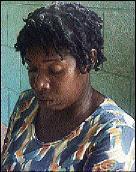
A resident ponders Prickly Pole's woes.
THEY CALL it Prickly Pole and maybe rightly so, because life is certainly a little 'prickly' and a lot poor in this southeast St Ann village.
Based on the Planning Institute of Jamaica's (PIOJ) recently launched poverty map, this area, situated in the belly of the parish, has more than half of the parish's poorest communities. According to the PIOJ assessment, based on the consumption of goods and services, St Ann is the poorest of the island's 14 parishes.
Prickly Pole has an estimated population of 1,000 residents. Mostly farmers, they have no other source of income. However, most own the houses in which they live.
There is electricity, but that is just about it. There is no running water. Run-off from rainfall is used for domestic purposes, and residents do not enjoy the convenience of flushed toilets.
lack of infrastructure
Prickly Pole has no recreational facilities, no clinic, no post office. The nearest ones are in the districts of Claremont to the east, or Alexandria to the west, both of which are some 10-15 kilometres away, respectively.
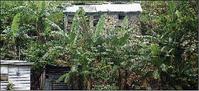
The small farming village of Prickley Pole is one of the poorest communities in St Ann.
An all-age school is the only learning institution in Prickly Pole. It is poorly attended due to a number of factors, but largely because of the absence of a basic school in the district. The nearest basic school is also in Claremont and usually, parents just allow their children to move on to the all-age school there instead of enrolling them in Prickly Pole All-Age.
It is not easy getting to Claremont or Alexandria. Public transportation is almost non-existent, with only one 15-seater Toyota Hiace bus making several trips back and forth to Claremont daily when school is in session, residents say. Now that school is out, the trips have been scaled down significantly and there is hardly any means to get around. The $70-bus fare is also steep for the average resident.
Brain drain
"Nothing is here to hold young people," Kerry, a young lady in her late 20s tells The Sunday Gleaner. She has been living outside the community for a little while now. After finishing high school, there was nothing for her to do outside of farming, so she went back to school. She is now a cosmetologist.
"The main thing is farming and if you are not doing that, you aren't doing anything," she says, happy to have escaped the clutches of poverty.
Farmers grow cash crops, mostly vegetables, which, residents say, no longer fetch a good price in the market.
"The price of fertiliser ah kill we," a 23-year-old farmer, Clive Livingston, complains. A bag of the material is priced at $7,250 and at least five bags are needed to fertilise a patch of cabbages. Coupled with this is the cost of transporting the produce to the Coronation Market in Kingston. It costs more than $1,000 to transport the vegetables by bus to market and an additional $300 for the fare. Market fee is $150.
"When you go a market, you haffi pay market fee and right now, cabbage a go fi only $5 per pound," he adds.
The consistent downpour of heavy rains is not helping either as it causes the vegetables to rot.
"Di pickney dem can hardly go school if you nuh have no money," remarks 48-year-old Ulin Green. She has 10 children, a mother since she was 12 years old. However, these days, she only looks after two, with whom she shares a one-room house donated by Food For the Poor.
Her story is similar to Livingston's. "Me used to plant cabbage, but me can't plant it again because fertiliser gone so high," she says.
adult illiteracy
In fact, the high cost of production has put her on hold until she receives seeds to plant carrots, which is a cheaper crop to produce. At the market, she earns no more than $2,000 every three weeks.
Green cannot read or write. Neither can her children's fathers. She often calls upon her children's skills when she needs something to be read or written.
"The community wants some help. All most [people] know about is to enumerate to vote," principal of the Prickly Pole All-Age School, Eunice Blake-Brown, says in confirming the high level of adult illiteracy in Prickly Pole.
There is also a low incidence of birth registration, which poses a different challenge altogether. While birth registration has improved somewhat, a significant number of children in the district are still virtually non-existent to the State.
"Right now, about 10 per cent of our children are not registered (at birth). But there have been times when a whole group [of enrolled students] is not registered," Blake-Brown states. That prevents some from moving on to high school at times.
poor school attendance
School attendance in a district such as this is expectedly poor. Of the 102 students enrolled at Prickly Pole All-Age, only about 60 per cent attend school on a regular basis. The others stay away due to the lack of financial support.
"There are children who travel up the gully from Eight Mile and they have to walk three and a half miles," the principal discloses.
In spite of the challenges, the school is not performing badly. Its literacy rate moved from just below 40 per cent in 2002, to over 80 per cent currently.
"We are also not performing badly in GSAT (Grade Six Achievement Test)," reports Blake-Brown. "We are doing well in communication tasks, science, social studies. Mathematics is where we are still not performing so well," adds the principal.