- Charles Dickens, Nicholas Nickle
"I was 13, going on 14, when I found out that my mother was not my mother." With this riveting opening line, Claudette Beckford-Brady captures her reader's attention and refuses to let go.
Sweet Home Jamaica is the first full-length novel for award-winning short-story writer Beckford-Brady. Set in Brixton, England, and Jamaica, Sweet Home Jamaica is a heart-warming tale about a Jamaican-born girl whose world had suddenly been shifted after learning that her mom is not her biological mother.
The protagonist Michelle 'Shellie' Freeman, a smart, feisty, independent, and ambitious girl, narrates the story. After finding out the truth of her parentage during a fight with her mother, she believes she has finally figured out the answers to some of the puzzles in her life. For example, why she was of a darker complexion to her four siblings, or why she was nobody's favourite. Not only does she respond to this new revelation with overt and outright rebellion, she decides to find her birth mother, Delisa Campbell, and by extension, a place to belong.
In the first few chapters of the novel, we are introduced to the people who shape her life. Among them are her best friends, Joy, Yvonne, and Stephanie; her brother with whom she shares a special bond; her first love, Clive and his parents, her husband Richard; her maternal grandmother, and her stepmother Mavis.
Ironically, it is Mavis who provides Shellie with the connection to her mother. After several unsuccessful attempts, the search for Delisa leads Shellie to her maternal family and awakens her knowledge in her native home.
The novel is divided in two, and reads like a sequel rather than a single text. Each book consists of more than 250 pages. The plot evolves seamlessly. There is a clear indication of time passing in the maturation of the characters as well as social background of the novel.
Volume one spans a period of seven years, from 1974 to1980, during which Shellie transitions from a headstrong teen to an ambitious young woman. She goes from a young woman unsure of her place within her family, to the unifying member of a large extended family. The volume ends during her second, and more prolonged visit to Jamaica with her maternal family. Already on the road to becoming a journalist and writer, it is during this time that Shellie makes the decision to return to Jamaica to live. Volume two picks up immediately where the first ends, and takes us from the early '80s through to the '90s, as Shellie makes her life in Jamaica, where she builds her business, finds love and essentially come full circle.
As far as Brady's writing style is concerned, it is almost without fault. The language is not overly simplified, and there is clear transition from Standard English to patois. I found her characters richly developed and interesting, even the most minor of characters. Michelle is all too human, at times coming across as conceited and superior. What makes her likeable is her ability to recognise her own shortcomings and her attempt to change.
The novel is aptly titled, as the concept of 'home' is one of the central themes in the novel. 'Home' epitomises the relationship that the protagonist has with different members of her 'family', as well as the connection that she has with Jamaica. I'm sure that returning residents can appreciate that connection to the country of their birth. Throughout the novel we watch Shellie traverse from one house/home to the next, but it is fitting that she names the one she settles with her husband Richard, Sweet Home.
Another aspect of the novel, which stood out for me, was Brady's ability to weave and build relationships between the characters, as well as with their environment. One of the strongest relationships in the novel is the mother/daughter relationship between the protagonist and the different maternal figure in her life - her stepmother, her maternal grandmother, her surrogate mother-in-law and her absent biological mother. But it is the bond between her and her stepmother that is the most moving, and one which clearly promotes the theory that nurture is just as important as nature.
Brady does also a wonderful job in illustrating the life of blacks in England and Jamaica during the period. Events such as the political tension in the '70s; the historical 'Smile Jamaica' concert in Kingston; the racial riots in Brixton and across south London; the 1980s election in Jamaica, were recounted.
The story is anchored by these details. Those little moments that appear so ordinary that make up the general fabric of the characters' persona. This was displayed time and again - Shellie's first visit to the island to meet her maternal relatives, the first time she has sex. The discussion Shellie has with her mother on contraceptives was certainly one of the more memorable moments in the novel. Another area in which Brady's attention to detail is exhibited is in her exploration of Rastafarianism. Its development in both countries and the characters' view of the discipline are illustrated more so from a social context than a religious one. This, it seems, is a tribute to Brady's own ideologies. In her biography, she states that having locks is a manifestation of her black African-ness and not a symbol of Rastafari. She admits to not believing in religion, which she views as oppressive.
Brady's occasional repetition of certain details, however, was the only weak points in the novel. Shellie's friends, the Barringtons, are romantic matchmakers - we got it. I'm also very big on patriotism, and recognising Jamaica as more than a country that spawned the greatest reggae artiste of all time, but there were times when it was a bit too 'preachy' for my liking. Also, there is a reason books have indices.
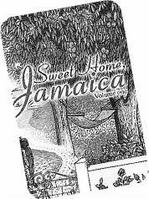
Overall, I think the novel is worth the read. It's a breath of fresh air, from the colourful cover art to the dramatic and often witty storyline; you may not want to put it down. Claudette Beckford-Brady has created a character that anyone can admire. Sweet Home Jamaica is definitely worth taking home.