Paul Messam, Gleaner Writer
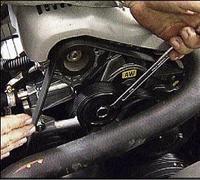
Replacing the engine drive belt. - File
Drive belts! Yes, they drive many vital units. Yet, they require little attention and are frequently forgotten. Failure of the belt to drive the water pump for example can result in a burned-out engine. "Be sure that all driving belts are in good condition and adjusted to the proper tension," advises auto mechanic David 'Mike' Jones. According to Jones, too loose a setting causes slippage and premature wear sometimes accompanied by a nerve-racking, high-pitched squeal. On the other hand, too tight an adjustment will damage the bearings in the units the belt is driving.
When a belt snaps or loses tension, the system the belt serves stops or works at reduced efficiency. Therefore, it is best to service these essential belts before they fail.
Inspecting the belts
Examine the belts on top, side and bottom surfaces. Twist belts for the following damage; which, if found, will require replacement.
Cracks: A cracked belt flexes excessively and might split apart.
Peeling: As layers peel away, the belt weakens and will eventually snap.
Split: A split can work through the belt rapidly, causing the belt to separate.
Glaze: A slick underside or side surface causes a belt to slip.
Oil-soaked: Oil on a belt causes the belt to soften.
It is important to get the exact-size belt needed for your car. Loosen the mounting bolts of the particular accessory or an idler pulley. Push in so the old belt falls; then remove it. With the accessory or idler pulley all the way in, the new belt should just fit on to the pulleys. However, you might have to pry the new belt over a pulley rim with a screwdriver. A new belt should have a tight fit. Pull back on the accessory or idler pulley and tighten the belt to the recommended new-belt specification. Run the engine for at least 10 minutes, then check the belt tension again to see that it meets the used-belt specification.


















