Sangster
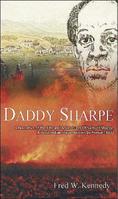
Daddy Sharpe - A narrative of the life and adventures of Samuel Sharpe, West Indian slave - written by himself, 1832
Author: Fred Kennedy
Reviewed by: Dr Alfred Sangster
Publisher: Ian Randle Publishers
The book of over 400 pages is an interesting historical novel of one of Jamaica's most famous national heroes - Samuel Sharpe, commonly known as Daddy Sharpe, and the leader of the slave rebellion of 1831.
The author, Fred W. Kennedy, has lived and worked in Jamaica and done extensive research on the life and times of Samuel Sharpe. What has emerged in this novel, created as though written by Sharpe himself, is an image of the society at the time of slavery just before the declaration of emancipation.
The novel is cast in four parts which encapsulate the various stages of Sharpe's experiences. Most of the 28 chapters of the book have a preliminary introduction written in jail. This is followed by an extensive reflection of the time before his incarceration.
Injustice
In chapter one the introduction starts in March 1832 - the year of his execution - and the flashback takes the reader to 1814, some 18 years earlier. It is an evening with Tacky, the old slave and folklorist, telling Anancy tales and the close-up view of the intrusion and abuse of his mother by the drunken overseer. This must have left an indelible memory to the boy slave. It would no doubt have provided an early resolution and a sense of the injustice of life on the slave plantation. In the succeeding chapters the author skilfully brings the dates together - the introduction moving by days while the flashback moves by years until they coalesce at the execution on May 23, 1832.
Part 1, Cooper's Hill, describes the early experiences of the boy-man, probably about 15 years old, is taken into the Sharpe household as a house slave. There he learned to read and write and became a trusted slave. It was while he was there that he came in contact with the Baptist Missionaries. It was also there that he met and loved the girl Nyame, and was to find out later that she was going to have a baby for him.
Part 2, The Bay, describes the move to The Bay (Montego Bay) and employment with Maria Garcia -Miss Mary - the proprietor of 'The Stag' Boarding House and watering hole.
New opportunities
The experience opened up new opportunities and contacts in the town and also allowed for contact with the Missionaries and, in particular, Pastor Burchell. But his poor record at 'The Stag' forced Miss Mary to terminate his employment and send him to another estate, where he would have a harder outdoor life as a slave.
Part 3, in Croydon Estate, a large farm in the Great River Basin, he soon prospered and was made a 'driver' on the estate and put in charge of group of slaves. But as he moved along in life, the Christian message had taken hold of Sam. The freedom that the gospel brought through Christ was now starting to burn in his soul. In all this turmoil of spirit he became a father, as Nyame delivered a beautiful baby girl and they were eventually married. He had in the meantime embraced the Christian faith and been baptised by Rev Burchell, and he was emerging as a local preacher and deacon. In fact, when Rev, Burchell had to return for a period to England for his health, San Sharpe was asked to take charge of the church.
His own reading of the Bible and the attractiveness of the liberating message of Christ who had come to set men free was relevant to the cause of his fellow slaves, who were in bondage. This drove him to collect a group of drivers from neighbouring estates, who would be the leaders of the rebellion that was to come. So his influence spread far and wide and he was soon to be called Daddy Sharpe and became the effective leader of the freedom movement, and later of the rebellion.
Confusion
But there were conflicting messages that created confusion in the minds of many of Sharpe's followers, even Sharpe himself.
First, the news from England was of a growing movement to free the slaves. Voices were being raised in Parliament and the opposition was growing to challenge this wicked and immoral practice. Some had it that there was a message of freedom from England which was being withheld by the authorities.
Second, the local planters would not hear of this idea, and made it clear that 'slavery was here to stay'.
Third, the Missionaries who spoke of the evil of slavery and the power of Christ to liberate the people could not endorse actions of violence and destruction. In fact Rev Knibb, in a sermon, preached that there is no freedom paper from England, and that the slaves should be obedient to their masters.
Uprising for freedom
This created confusion in the minds of the slaves, who felt betrayed by the Missionaries. They even said: "Parson now turn pon we like buckra massa."
Sam Sharpe had progressed from: Field Slave to House Boy, from Spiritual Seeker to Christian Preacher, and from Freedom Activist to Rebellion Leader. He was to pay the price later by being hanged in the public square in The Bay.
Plans by the leaders were that after Christmas the uprising for freedom would begin.
But on December 27, 1831, the trash house at Kensington estate was set on fire by John Dunbar, one of the leaders. Sharpe records in his diary, "All went wrong in an instant." The fires raged from estate to estate and there was no stopping the madness. The slaves hoped that the masters would run from the estates and leave the slaves free. This was a terrible mistake and there was a huge price to pay.
Part 4, The Bush, describes how the scattered slave armies took refuge in the bushes and caves and operated in a hit-and-run exercise. However, the disciplined and determined troops exacted a terrible toll, and slaves were shot and hanged in a merciless fashion. The establishment was thirsting for blood. The slave armies were flushed out and the rebellion quashed, often with the help of the Maroons. The non-conformist pastors were also imprisoned for a time. The Colonial Church Union effectively put a stop to the religious practices of the sectarian groups. But the Baptists, Moravians and Presbyterians continued to fight valiantly for the cause of emancipation.
Last to surrender
Sam Sharpe was one of the last to surrender to his old master Sharpe, who delivered him to the goal at the Bay on the following day. In a mock trial he was condemned and the 27 days to his execution were a time of review and reflection. The country took stock of the effect of the rebellion.
"There was anger and resentment on both sides. The slave had been deprived of his chance of freedom, and the owner, who was never in support of this claim in the first place, hated him even more for the destruction and havoc he had caused throughout the land."
But the pincer movement of protest by the slaves, combined with the recognition of the evil of the system of slavery by the Imperial Powers, led to the Resolution in the British Parliament that on Friday the 1st day of August, 1834, all persons duly registered as slaves in His Majesty's Kingdom were granted the status of apprenticed labourers, free at last from the chains of slavery.
The Epilogue (chapter 29) is a moving tribute to the life and work of Sam Sharpe and his impact on the system of slavery. It records his death with dignity without flinching, and some of his last words.


















