Michael Robinson, Gleaner Writer 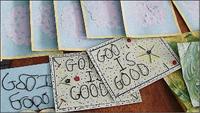
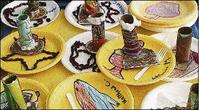
Artwork produced by pre-school students attending the Promise Learning Centre summer school, North Avenue, Kingston. The programme is geared towards helping autistic students express themselves through art. - Photos by Michael Robinson
AUTISM IS a neurological condition which usually appears in children by age three. It is an impairment of brain function that is marked by deficits in social interaction and communication.
Other characteristics of the disorder include repetitious, anti-social and even violent behaviour. Autistic people also exhibit limited use of language and a tendency to focus intently on objects. Some parents notice symptoms in their children as early as infancy.
Range of disorders
Autism spectrum disorder (ASD) refers to a group of related disorders of brain development which, along with autistic disorder, includes childhood disintegrative disorder, Rett's disorder, pervasive developmental disorder and Asperger's syndrome. Autism and ASD tend to be used interchangeably.
In rare cases, some people with autism display brilliance in a specific area, usually relating to memory, like music or math (think Dustin Hoffman in Rain Man).
Commonly referred to as savants, these individuals display characteristics in one area that starkly contrast with their impaired functioning on a more general level, namely social and cognitive.
Rise in Jamaica
Little is known about autism, but research points to a genetic correlation with connections to the central nervous system.
In Jamaica, as is the case worldwide, autism appears to be on the rise. However, the increase in diagnosed cases might have a lot to do with the fact that developments in the areas of research and assessment have increased the accuracy of detection.
While autism cannot be cured, early identification and treatment go a long way in easing the stress of living with the disorder as well as the presenting symptoms.
Art therapy has been shown to be highly effective as a course of management. It seems autistics have more trouble processing verbal information and expressing themselves with words.
When it comes to visual information, their ability to process as well as express themselves is greatly increased. As a result, they can learn new information as well as ease the stress associated with living in a space where they are unable to connect with other people through the socially popular method of shared expression.
Local statistics are skewed by frequent misdiagnosis of ASD. Many Jamaican children with ASD are diagnosed as being deaf or mentally retarded. However, research and education are changing what we know.
At Promise Learning Centre, on North Avenue in St Andrew, art is used in all the subject areas to aid in the learning process.
Established 15 years ago, the school is dedicated to the needs of children with autism and its associated learning disabilities. The school caters to children from age four- 21, and, according to director Marjorie Hylton, there have been positive results with the incorporation of art into the curricula.
Tailored to needs
Due to the spectre of autism, each child is affected differently and, as such, the curricula at Promise are tailored to their individual needs. Nonetheless, there seems to be success across the board with art as therapy.
"Through art, we have noted that the children are able to express themselves, especially the older ones," says Hylton. "These are children who can't even talk to you."
She says the children use colour to express their moods, and the ability to express themselves has a calming effect.
Hylton recalls one student who, she says, was particularly gifted.
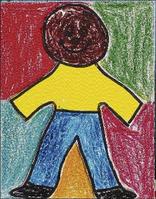
"We actually had one student who was able to sit and draw you as you are. He drew everything in cartoon form. I believe art is an escape for them, in their own autistic world, to get out exactly what's inside their head," continues Hylton.
She explains that even heavy issues, such as abuse in the home, are dealt with by the children through this mode of expression.
Mood colours
The neurological condition, viewed by some as a disorder, is an impairment of 'normal' brain function. That means these children process information differently. Their choice of light, bright colours when they are in a good mood and dark colours applied with heavy, harsh lines when they are troubled, points to a healthy emotional state in need of an outlet.
Art not only soothes those living with autism, while giving them a means of understanding and expression, it develops their imaginations and visual-spatial intelligence, expanding their minds in a way that no medicine ever could. Through art, it seems that autistic people have a way of getting to know themselves even as we get to understand more about their inner world. In the absence of a cure, perhaps art is the closest we can get to a true connection.


















