Jarmila Jackson, Features Writer
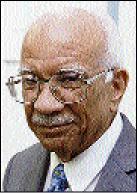
Professor Gerald Lalor - Rudolph Brown/Chief Photographer
While it is well known that lead contamination can be threatening to human life, it is a lesser-known fact that it can have an equally disastrous impact on wildlife.
According to an article recently published by ScienceDaily.com, "The most significant hazard to wildlife is through direct ingestion of spent lead shots and bullets, lost fishing sinkers and tackle, and related fragments, or through consumption of wounded or dead prey containing lead shots, bullets or fragments."
Professor Gerald Lalor, director general of the International Centre for Environmental and Nuclear Sciences (ICENS) at the University of the West Indies (UWI), Mona, believes that while there is no single lead source that could prove hazardous to the environment, there are many which in combination could, over time, negatively affect our ecosystem.
Water contamination
Shooting ranges and heavily hunted sites are examples of places where lead deposits can be found in large quantities and, as ScienceDaily warns, "dissolved lead can result in lead contamina-tion in groundwater".
According to Lalor, "no safe substitutes have yet been found" to lead shots and sinkers used for hunting and fishing, "though work is in progress".
Other sources of lead include exhaust emissions from leaded petrol (which until recently was still being used) and vacuum cleaner dust. Workers such as furniture restorers, mechanics, radiator workers and painters also come into contact with the material daily. Mine waste in the Kintyre area in St Andrew, accor-ding to Lalor, is also a major contaminant.
Risk-reduction project
Fortunately, Lalor and ICENS have developed effective infrastructure needed for a successful programme of risk reduction and the prevention of lead poisoning.
"ICENS has done a lot of work on this; we have reduced the blood lead levels of children significantly, educated parents and children and briefed the medical professions. This has been very effective in some areas, especially Kintyre. But generally, more resources need to be put into child care, and the removal of used lead acid batteries from children's environment." Lalor added, "Exposure in the first two years of life plays hell with children's brains."
jarmila.jackson@gleanerjm.com