
There's a plethora of 'roots drinks' formulae on the market. Some of them claim to be 'the cure' for men's 'weakness' and women's 'frigidity'. The question is, how effective are these bottled herbs and do they meet quality and regulatory standards?
I would say that most of these formulae have been developed, using empirical information known for more than 50 years by a generation of Jamaicans. Others are created for commercial gain based on knowledge gleaned from 'herbal practitioners'.
But, this is one area of herbal production in which local scientists should be placing more interest. They should investigate the chemical activities of these herbs as stimulants, as well as the synergistic activities of the combination of these herbs.
There are, for instance, many imported canned stimulants with amino acids and herbs which are enjoying high consumer demand. Indigenous herbal or 'roots concoctions' should be recognised as potent 'wellness drinks' which can be commercialised and promoted on the international market. This area would be a big asset to our economy.
The following herbs are used in many 'roots drinks':
Sarsaparilla; smilax ornata
Chainey root; smilax laurifolia
Strong back; bourreria ornata,
Morinda royoc
Rock fern; dryoptens spp
Coconut root; cocos nucifera
The drinks or tonics may also contain wild giant barbasco yams (from which diosgenin is isolated). This herb is classified as a steroidal saponin. It is interesting to note that the pharmaceutical industry used diosgenin as the first source of commercial hormone for the United States drug laboratories in the production of fertility pills to restore women's hormonal balance and to relieve menopausal symptoms.
Another additive to these tonics is 'damiana', otherwise known as 'ram goat dash along', which is said to stimulate the sexual organs, circulation of the blood and metabolism. It is a stimulatory nerve tonic and helps to treat sexual problems in women. Damiana lowers blood sugar, therefore, people with type-one diabetes should use this herb with caution as it may cause low blood sugar if taken along with diabetic medication.
Other additives
Other additives to tonics are cayenne pepper, ginger, garlic, onion and rosemary. These foods or spices also remove the bad cholesterol and fats from the blood. They are called stimulants as they stimulate blood flow.
Cayenne pepper, capsaicin frutescens, has been noted as a cardio-tonic and a pain reliever. It is topically used in pain-relieving creams and ointments. Cayenne is able to stimulate the flow of blood to the male organ. Cayenne must not be taken with common medications, such as anafranil 'the bomb' imipramine, tofranil, surmontil and warfarin. This would increase the side effects of the drug.
Garlic, allium sativa, is a contributor in treating and improving the blood flow. Some sources suggest that garlic should not be consumed prior to surgery since it can prolong bleeding.
Onion, allium sepa, is somewhat like garlic. The juice is known to be an aphrodisiac and like garlic, may inhibit platelet aggregation.
Ginger, zingiber officinale, as dried root, is an ancient herb used for nausea and vomiting in pregnancy and a stimulant as well. It is reported to be a circulatory stimulant and anti-inflammatory.
Dr Diane Robertson is a pharmacist and recipient of an honorary doctorate in complementary medicine for her work in herbs; email: yourhealth@gleanerjm.com.
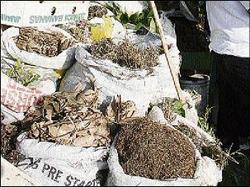
A variety of herbs and roots used to make 'roots drinks'. - file