Reprisal killings hurting Jamaica
published:
Sunday | June 1, 2008
Daraine Luton, Sunday Gleaner reporter
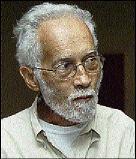
Shields, Levy and MacMillan
ONCE UPON a time, it was the case of catching Quaco's shirt if you were unable to get to him, according to an old Jamaican proverb. Today, if you can't catch Quaco, you take revenge on his entire clothes line and his backyard.
Horace Levy, board member of the Peace Management Initiative (PMI), tells The Sunday Gleaner that he has noticed that the scope of reprisals has widened to include women.
"The crime wave is like an epidemic," Levy says.
The PMI member, who has worked in several war-torn communities trying to broker peace between warring factions, says the desire by gangs to outdo the other during conflicts, leads to massive bloodshed.
recent incident
"Women and children are now victims," Levy says. He cites the recent incident in Allman Town, central Kingston, where 14 persons have been killed in the past three months, six of them women.
In years gone by, women and children were spared by gunmen during reprisals, but this has changed.
Acting Commissioner of Police (ACP) Glenmore Hinds, who heads the intelligence-driven unit, Operation Kingfish, tells The Sunday Gleaner that "the thirst for instant revenge" and "an inability to resolve conflicts," are factors contributing to reprisal killings.
ACP Hinds says that persons killed are in some way connected to members of gangs. "They become targets for reprisals and if someone is beside them, they may be killed too," Hinds says.
Mark Shields, deputy com-missioner of police in charge of crime, reveals that gangs account for the vast proportion of murders yearly.
"Our analysis of the crime statistics for 2007 shows that 60-70 per cent of all murders are gang related," Shields says. He adds that when a member of a gang is killed, there is normally some reprisal in the form of a killing.
revenge
"If they are unable to kill members of the rival gang, they then kill members of the family," Shields says.
Meanwhile, University of the West Indies psychiatrist Jeffrey Walcott says that a lack of confidence in the justice system is chiefly responsible for the culture of revenge that has embedded itself in the country.
"The perception among most Jamaicans is that the police cannot be trusted and when people feel they will not get redress through the legally established channels, they set up their own systems," Walcott says.
anarchic justice
Shields calls this anarchic justice; one where people resort to going to the dons to get their problems solved.
Minister of National Security Colonel Trevor Macmillan, in the Senate on Friday, said that "most of the killings have stemmed from conflicts between some of the more than 125 gangs that are presently operating throughout the country, and from reprisal actions in inter-gang warfare".