Dr Carlton E. Davis, Contributor

Davis
The energy challenge is two-fold: How soon can the plants switch to a cheaper fuel? How far and how fast can the industry drive efficiency regardless of the fuel used?
A number of factors favour natural gas - it is cleaner and feasible to be used for calcination as well as the rest of the process, but the question is whether it will be available in time to address the current crisis and at an acceptable price.
'Catch 22'
In regard to efficiency, there is much room for improvement, although to varying degrees, in all of the plants. But the cost of oil is creating a 'Catch 22' situation. It takes money to effect the efficiencies, but the current cost puts real pressure on the companies. If the intentions of the MOUs which Jamaica had signed with Trinidad and Tobago had been realised, we would have gone some way to dealing with the problems; but, to paraphrase the American poet Maya Angelou, the lack of realisation of the objectives of the MOUs is just another example that "the gold of the promise of serious Caribbean integration is yet to be mined".
Hopefully, Venezuela, which has been very supportive of Jamaica over many years - a lucrative alumina contract with the state company, Venalum, in the late 1970s and early 1980s, the San José Accord, the Caracas Agreement and PetroCaribe - will be able to provide us with the gas within a reasonable time-frame. But as I said earlier, coal is the other option we have to keep in mind if we cannot secure natural gas.
This issue could in some respects be more intractable than the oil one. Without getting too technical, I should say that, in general, there are a number of chemical and mineralogical features of bauxites, which determine the feasibility of their economic processing into alumina.
The importance of alumina and silica contents is fairly well known. The higher the 'extractable' alumina content and the lower the 'reactive' silica, the better is the bauxite. But it is not just the alumina in its chemical form that is important; its mineralogical form is also important. From the perspective of the Jamaican bauxites, the two forms of relevance are the more easily extractable gibbsite and the less easily extractable boehmite. Our reserves of the former are being run down, and we have to do a fine balancing act in processing what is left, as three of the four plants, as currently configured, can only process ores with low boehmite contents.
Iron mineralogy
The main problem confronting the industry currently, concerns the iron mineralogy of the bauxites. There are two basic forms of relevance to us: Goethite (named after the German man of letters, Goethe); and hematite. The more of the latter the better. The Kirkvine plant is running into ores which have high goethite contents, (with high associated phosphates) and this is adversely affecting production levels and costs. Had the problem been anticipated years ago, the 'good' ores, for example in the Hope/Melrose basin south of Melrose Hill, would have been rationed to enable them to be blended with the'bad' ones north of the hill.
Obvious consequences
Windalco has been trying to deal with the problem by a variety of means, including having research done in Ireland, Australia and the United States of America. Because of the urgency of the matter, the Jamaica Bauxite Institute will be recruiting retired experienced ex-Alcan chemical engineers with experience in the area to lead a research programme on this problem.
The existence of these goethite ores in its mining lease is one reason for the expensive mining configuration Jamalco is pursuing in Manchester.
The problem is one that has to be overcome, as it could render millions of tonnes of ore unprocessable with obvious consequences.
The industry remains one of the pillars of the Jamaican economy, but it is challenged by: (a) a changing ownership scenario with all the uncertainties that this entails; (b) the significant escalation in the price of oil and the impact of this on the industry's competitiveness; and (c) mineralogical quality issues of certain Jamaican ores.
Given its importance to the country, both Government and the operations will have to work closer together to overcome the problems, such as those I have described.
Dr Carlton Davis is a former executive director and chairman of the Jamaica Bauxite Institute.
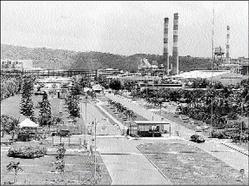
Aerial shots of the Alpart Kirkvine bauxite plant in Manchester photographed on September 15, 2004. - Andrew Smith /Photography Editor
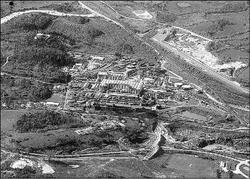
Jamalco plant in Clarendon, co-owned by Alcoa and the Goverment of Jamaica. - File


















