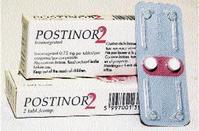
Q I would like to ask you how often can one take the morning-after pill?
If I have the regular birth-control Pill, I tend to get nauseous. Also, the condom is not good for me because sometimes it bursts when I have sex with my partner.
However, the pharmacist keeps insisting that I should not take the morning-after pill too often.
What's your view?
A These days, a lot of young women use the morning-after pill. Could I begin by pointing out that it really should NOT be called by this name because it isn't just a 'morning-after' thing!
In fact, it can be taken anytime up to 72 hours after unprotected sex. That is why docs rather call it the post-coital pill.
Please note that it prevents about 84 per cent of pregnancies. That is quite an impressive feat. But it does mean that about 16 per cent of all pregnancies - which is one in six - are NOT prevented.
In other words, the post-coital pill (PCP) has a small but appreciable failure rate. And that is one good reason why women should not make a regular habit of using it.
Health concern
But is there any danger to your health in taking it frequently?
Well, we don't know too much about that yet - because the research has simply not been done. This week, I have spoken to a representative of the company that makes it, and she told me that all they can say is that they regard this product for 'OCCASIONAL' use only.
I must add that I know a number of women who have cheerfully taken the PCP around six to seven times for the year. But I really would NOT recommend that because the hormonal dose contained in this tablet is pretty high. In fact, it is about 10 times the amount in one ordinary contraceptive Pill.
Admittedly, it is extremely rare to see a patient who has come to any harm from taking the PCP. At present, it does seem to be a generally safe medication. Provided you follow the directions of the chemist who dispenses it, you are most unlikely to come to any harm.
Side effects
It causes most women no side effects at all, though in the few days after taking it, a few people do experience irregular bleeding, dizziness, headache, sickness, and tiredness.
These are trivial things and are soon overcome. However, it is possible that more important side effects could emerge in the long term. We'll just have to wait and see.
Summing up, personally I do not really think that you should be using the post-coital pill more than a maximum of five times a year - but other docs may well take a different view. I do feel that it is more sensible to use regular, safe methods of contraception - like a low-dose Pill.
In your case, you have had problems with two 'regular' contraceptive methods: the Pill and the condom.
You say that the Pill has made you feel nauseous. But there are other brands of the Pill which you could try - and maybe they won't have that effect! Alternatively, you could take the 'Mini-Pill' or progestogen - only Pill, which is unlikely to cause nausea.
Regarding your complain of bursting condoms, this really should not happen if couples are careful.
Even if your partner has a larger-than-average organ, you should be able to get a condom on him, and he should be able to get through intercourse without breaking it!
Take care that you are following the instructions on the leaflet that generally accompanies the pack of condoms.
Above all:
Don't tear the condom with your rings (or other jewellery).
Don't rip the condom with your fingernails.
Don't tear the condom with your teeth!
Q Doc, my girlfriend and I are young teenagers, and we cannot find her clitoris.
As a result, she doesn't discharge when we have intercourse.
Is there something wrong with her? Is it possible for a girl to be born without a clitoris?
A Almost every female in the world has a clitoris. In all my career, I don't recall ever having seen a woman without one.
Frankly, if you are so young that you don't know where the clitoris is, I don't feel that you should be having intercourse! My best suggestion is that your girlfriend should go to a sympathetic female doctor, and have herself checked out.
The doc will show her where her clitoris is, and will doubtless give her good advice about sex and its risks.
Q I am 17, and my menses are intensely painful. My mother says that nothing can be done about it, and that it is a 'woman's lot'.
Is she correct, Doc?
A No, she isn't. These days, a lot can be done to alleviate period pains - or to remove them altogether.
Please see a doctor. He or she will certainly be able to help you with one of a large range of modern solutions.
Q I am 21, and I've just been told that I have caught gonorrhoea from a boy. Can it be cured, or am I doomed to suffer all my life?
A Gonorrhoea ('the clap') can be cured within a matter of days, provided you get the right antibiotic from a doc - as soon as possible. Please note that any sexual partners you have had should also be treated.
Q I am a 19-year-old woman and I have a funny feeling in my nipples. Could this be breast cancer, Doctor? I am so afraid.
A Breast cancer is very rare at 19. And it does not produce a 'funny feeling' in the nipples. So I am sure that you can quit fretting.
Breast cancer generally affects women who are well over the age of 30 and its most common symptom is a lump.
Q I am a 20-year-old guy and - try as I might - I cannot get my foreskin to roll back before sex.
What is wrong with me?
A You have a common condition called 'phimosis'- which really means that the opening at the end of the foreskin is too small.
Hygienically, phimosis is not good for a guy because germs can breed under the tight foreskin. Also, as I think you have discovered, phimosis makes having sex pretty awkward.
Therefore, you need to get circumcised. It'll be a really simple op with a quick recovery period. Good luck!
Want advice from Doc? Email editor@gleanerjm.com or fax 922-6223, Attention: Doctor's Advice. Or mail your question to Doctor's Advice, The Gleaner Company, 7 North Street, Kingston.


















