Leighton Levy, Gleaner Writer
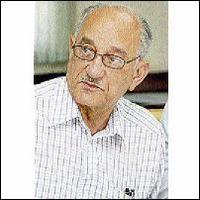
Michael Fennell - Continued
Mike Fennell, president of the Jamaica Olympic Association (JOA) is confident that no harm is likely to befall Jamaican athletes attending the Olympic Games in Beijing this August, even as tensions remain high over China's crackdown on citizens of Tibet in recent weeks.
The fallout over China's crackdown on Tibetans has been marked by demonstrations in several countries along the route being travelled by the Olympic torch in recent weeks. Several countries have shortened routes and/or have cancelled the torch relay entirely as people continue to protest the actions of the Chinese military.
Risk everywhere
"I think we all understand that wherever in the world we travel today there is a risk, even in the safest of destinations," Fennell said just days after returning to the island from a recent trip to Beijing, where matters concerning the existing tensions and other issues related to the hosting of the Games this August were discussed by the 205-member nations of the Olympic charter.
"So there is no more danger to an athlete going to Beijing than they are travelling around. In fact, I would strongly argue that they are safer. I am not a security expert but I would imagine that people who want to create problems for others look for weak points to do this and not for points where security is strong. Having observed and being informed about the type of security arrangements that are being made for Beijing, I think that it is going to be the safest place to be."
Fennell, who has been president of the JOA for 31 years - having been elected to the post in 1977 - is firm in his belief that the International Olympic Committee (IOC) is taking the correct approach to the situation regarding China and Tibet, even with the Olympic Games being just four months away.
Critics of the IOC have lamented the relatively quiet stance the IOC has taken on the worldwide protests, the riots and resulting tensions in Tibet with IOC president Jacques Rogge, while expressing concern over the situation, saying that the matter is political and not the business of the IOC.
Fennell says perception that the IOC has been mum on the matter is incorrect.
Celebration
"I don't think the IOC has been quiet, they have made what I would consider the necessary comments, but they're not making them every day because it is not their main issue. Their main issue is to ensure the celebration of the Games come August," he said.
"The organisations that need to pay attention are like the United Nations, China and Tibet, and indeed any matter of international relations between countries, those are matters that have to be solved at the political level."
That being said, several countries including France and Germany, two major political powers, have revealed that their political leaders will be boycotting the opening ceremonies at the Games this August and there have been calls for the president of the United States to do the same. United Nations Secretary General, Ban Ki Moon, also said publicly that he might not attend the opening ceremonies.
Despite this, Fennell believes that these actions may very well be the extent of the political action taken against the Chinese government.
Citing the Olympic Games in Montreal in 1976, Moscow in 1980 and Los Angeles in 1984 - events that were affected by boycotts, Fennell said the world has learned from those experiences.
"Since then I would describe the world of sport and the world at large as having grown up a little bit and has come to the realization that boycotts do not solve anything and in fact do more damage ... and our responsibility is to the athletes and we have to ensure that the athletes' welfare and their futures are not jeopardised by other political considerations."


















