
Tony Becca
THE JAMAICA Cricket Association's (JCA) top competition bowls off on Saturday and, like so many times in the past, it does so with a new format.
Unlike the previous changes which were basically for change sake and which did nothing for the development of the game or for the improvement of standards, this one promises to do something for the game - to assist in its development and to improve the standard in terms of the skills.
In what is called a semi-pro league, the league will be offering money to the players and, in this day and age - a day and an age in which money is everything, or almost everything, a day and an age in which players are expected to train four, five, six, seven or even eight hours a day in an effort to be fit and in order to hone their skills, and in a day and an age in which employers hardly employ sportsmen and sportswomen or allow them time off to train and to practice, this is fantastic.
It is not a lot of money, but it is a start. Instead of playing for nothing, players, including some from around the region and depending on their status, will be earning between $6,000 and $21,000 per match.
On top of that, the clubs and parishes will be getting some money to improve their facilities, coaches, umpires and scorers and to put into their pockets.
As good as the move promises to be, however, there are a few questions which must be asked, and they include the following: where is the money coming from? How long will it last? With only eight teams and only seven matches, when will it go to return matches for a longer, more beneficial season? Why are some teams 'blessed' with one overseas player while others are not, and are all the coaches level two coaches as required by the organisers?
As far as the money is concerned, it seems to be coming from the JCA - mostly from the sale of boxes at Sabina Park and from various sponsors who, individually, will be identified with a club or parish, and mainly through the use of their logos.
Hopeful
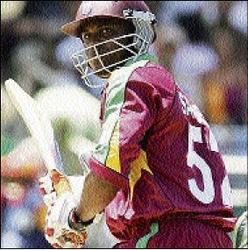
Jamaica and West Indies all-rounder Marlon Samuels to play for Melbourne in the Super League, which starts on Saturday. - File
As far as the distance is concerned, it appears that one can only hope for the best; as far as return matches and a longer season is concerned, that, apparently, will depend on increased funding. As far as the placement of overseas players is concerned, it seems that those who wanted got and those who did not want did not get.
From the reports, it appears that once they did not get Kieron Pollard - the big hitter from Trinidad and Tobago who pulled out at the last moment, Melbourne, the all-island limited-overs champions who boast the likes of Marlon Samuels, Carlton Baugh Jr, Donovan Pagon, Nikita Miller and Andre McCarthy, did not wish for anyone else. So, too, did St Elizabeth - the all-island league champions who parade not only Jerome Taylor, Daren Powell and Brenton Parchment, but also one like Shawn Findlay.
It could be that Melbourne and St Elizabeth believe they are strong enough, that with none of Brian Lara, Shivnarine Chanderpaul and Ramnaresh Sarwan available, they do not need any assistance, and it could be simply that they believe in their young players and do not want to drop any of them in favour of a player from around the region who is not much better, if indeed he is better.
Level two coaches
As far as the coaches are concerned, the JCA has ruled that they all must be level two coaches, and with coaching at the clubs and in the parishes so important, it is hoped that, in the interest of the game and the young players, in the interest of Jamaica and West Indies cricket, the JCA will stick to that requirement that, like the money provided to improve facilities, it will monitor the clubs and parishes to ensure that they are doing what should be done and nothing else.
The success of the league will depend on the standard achieved over the next few years, and although Jamaica and the West Indies got away without it in the past, that will depend on the quality of leadership in the clubs and parishes - on the seriousness of the clubs and parishes about the game, about their conviction to improve the skills of their players and on the quality of their managers, and mostly their coaches.
What is needed now is the support of those who claim to love the game.
Unless the spectators come out and support the matches, unless they support their favourite clubs and their parishes, the semi-pro league, like all the changes that went before, will not last as long as a snowball in hell.
To first vice-president Paul Campbell, to all the board members who worked on putting the semi-pro league together, and to all the businesses that came up with the funding, on behalf of cricket, in Jamaica and in the West Indies cricket, many thanks.


















