Human Papillomavirus (HPV) is a common virus that is spread through sexual contact. Most of the time HPV has no symptoms so people do not know they have it.
Dr Ernest Pate, PAHO/WHO representative in Jamaica, noted that HPV is a major killer of women in the Caribbean and Latin America. "Globally, it is a serious public health problem," said Dr Pate. He was speaking at a recent benefit dinner for the Jamaica Cancer Society at the Jamaica Pegasus hotel.
There are over 200 types of HPV. Some are low-risk while some will initiate cervical cancer. There are also some that will cause other kinds of cancer in both men and women, while some cause genital warts in both sexes.
Dr Pate says it's important for women to be screened. He notes that there is approximately 500,000 case of HPV each year and 230,000 death each year. He says that 80 per cent of those are in poorer countries, such as Jamaica. He explained that the infection rate is 35 cases per 100,000 in the Caribbean, which is the third highest of those at risk of cervical cancer in the world. He said developing countries have five times the number of cervical cancer cases.
Transmission
HPV is the most common type of sexually transmitted disease. While many have it, they will not know, as some strains have no symptoms.
Genital HPV is passed on through genital contact, most often during vaginal or anal sex. A person can have HPV even if years have passed since they last had sex. Most infected persons do not realise they are infected or that they are passing on the virus to their sex partner.
Condoms may lower the risk of HPV, if used all the time and in the right way. It may also lower the risk of developing HPV-related diseases, such as genital warts and cervical cancer. But, HPV can infect areas that are not covered by a condom - so condoms may not fully protect against HPV.
In some of the cases, the body's immune system clears the HPV infection naturally within two years. This is true of both high-risk and low-risk types.
HPV Vaccines

The vaccine is recommended for children as young as 10 years old.
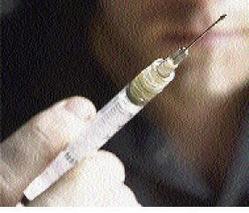
Over the past few years, two vaccines have been developed to target HPV - Gardacil and Cervarix. The vaccine works by preventing the most common types of HPV that cause cervical cancer and genital warts. It is given as a three-dose vaccine, recommended for girls 11-26, or before sexual activity. The vaccine is not yet licensed to be used in boys. Research into the effect it has on preventing the disease in men is ongoing.
Dr Pate notes that so far, four high-risk types of the virus have been identified. He noted that the vaccine created are very effective. "Ninety per cent are immune when they get the vaccine, so it is effective."
At what age do we get the vaccine?
Dr Pate notes that beyond five years of sexual activity the effectiveness of the vaccine decreases.
The vaccine is recommended for children as young as 10 years old, up to age 21, as studies have shown a greater effectiveness in these age groups. The cost of the three doses that is required for complete coverage is US$360 (J$25,500), US120 (J$8,500) per dose.
Would you get your child vaccinated?
René Allen Casey has a 10-year-old daughter.
"I would first consult with her paediatrician and if he recommends it."
Felicia Jacksonhas an 11-year-old daughter.
"Yes, I would."
Patrice Williamshas a 3-year-old son.
I would allow him to decide. By age 12 or 13, he will be learning about sex and human biology and I would be able to discuss it with him."
Paulette Forsythe has an 18-year-old boy and 14-year-old girl.
"I would discuss it with my doctor to get more infomation before making that decision."
Names changed
Additional source: http://www.cdc.gov/vaccines/vpd-vac/hpv/vac-faqs.htm.