
Eulalee Thompson
Some men and women face ageing with fear at their sides. The arrival of the first strand of grey hair, for example, is greeted with dread and a deep feeling of loss (loss of youth); sometimes much effort and money is channelled into keeping the 'greys' black.
Wrinkles, changes in sexual function, wearing reading glasses, menopause, andropause and, perhaps, chronic lifestyle diseases are some of the other health issues which ageing individuals must face and make peace with.
But Dr. Denise Eldemire-Shearer, University of the West Indies' (UWI's) Professor of Public Health and Ageing, said that by no means should ageing, a normal development phase in the life cycle, be feared.
"I think if you are uninformed of the ageing process, or if you are just going on some of the pictures of the elderly, some of which can be scary, or if you are someone who has never had an older person in your family or has had bad experiences with older persons, then it can be seen as scary," she said. "I don't think it is something to be feared but, one of the best things is to be informed and then it will not be feared."
Ageing is a part of life
Prof. Eldemire-Shearer, who will deliver her inaugural professorial lecture tomorrow at the UWI's Main Medical Lecture Theatre, stressed that ageing well is possible and that there is beauty in old age.
"We can age well when we recognise that it is an inevitable part of life and become informed of what to expect. But, first of all, there is the mental process of recognising the beauty in old age as in youth," she said.
The block of the population in the 65 years and older age is expanding, here in Jamaica and globally, as public health care improves. Currently, this age group is about 10 per cent of the population but Prof. Eldemire-Shearer, who is also head of the UWI's Department of Community Health and Psychiatry, said that in another 20 years the projections are that older persons will make up a significant 20 per cent of the population. Many people are, therefore, living another 20 to 25 years post retirement and quality of life and planning for old age are becoming more important issues for Jamaicans while they are still young.
"Men tend to be left out because they retire and have nothing to do while women tend to be integrated in the community and in the church where they are 'head cook and bottle washer'. Men's work gives them purpose but, afterwards, then what?" asked Prof. Eldemire-Shearer.
Lifestyle changes
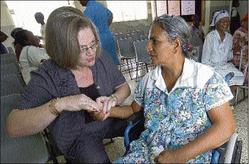
Professor Denise Eldemire-Shearer (left) interacts with Alicia Nebar, one of her elderly patients, last Thursday, at the University of the West Indies' Department of Community Health and Psychiatry. - photos by Ricardo Makyn/Staff Photographer
Besides financial planning for old age, young people should begin to develop hobbies and other planned activities that can keep them engaged and self-actualised in retirement.
Much of the illness, disability and death associated with advancing age can be managed through healthy lifestyle interventions (for example physical activity, good nutrition, avoiding tobacco use and the management of emotions) in youth as well as regular screening visits for conditions such as breast, cervical and colorectal cancer, depression, diabetes and hypertension. These interventions will reduce the risk for the development of the chronic lifestyle diseases (such as heart conditions, diabetes and hypertension) in old age.
"(Chronic diseases) start in the younger age group but they last into old age. So, the issue of prevention becomes critical in younger people. But, having not prevented them, if complications arise, then management in the older age group is more important," said Prof. Eldemire-Shearer.
Memory loss and senility are also other conditions that concern an ageing population. She said, however, that it should not be assumed that memory changes are only related to ageing and are normal as these changes can occur in conditions such as depression and should be investigated.
And to put the population at ease, Prof. Eldemire-Shearer said that in her last study it was found that only about 10 per cent of older adults will develop dementia (which includes Alzheimer's disease).
eulalee.thompson@gleanerjm.com
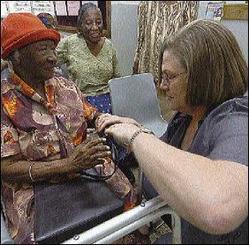
Professor Eldemire-Shearer attends to an elderly patient.


















