Amitabh Sharma, Features Coordinator
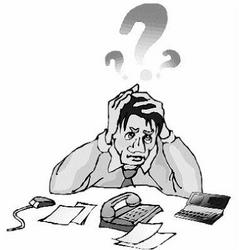
If you are having stomach problems - gastritis, indigestion - you might not want to blame it on the spate of eating out. This may well be symptoms of stress - mostly work-related.
"Common symptoms of stress are headaches, upset stomach and gastritis," says Dr Hame Persaud, "If these symptoms are ignored, it can lead to stress ulcers."
It is that time of the year that people can be susceptible to stress-related problems. "Stresses can occur after binges, long holidays and coming back to real-life work pressures," he says.
Understanding stress
There are other factors that lead to stress at the workplace; these could be addressing the demands of the job, the pressure to meet those demands and the inability of the employee to cope with the demands.
"Stress has psychosomatic symptoms like anxiety and depression," says Dr Persaud. "The mind affects the body and the body affects the mind."
There are several medical conditions associated with stress. It can lead to high blood pressure, irritable bowel syndrome, and constipation. In certain cases, wheezing or asthmatic attacks can also occur. "These can affect people who have had no prior history of asthma," he says.
A person under stress can also experience cramps in hands and feet. These are some of the major symptoms.
Stress at the workplace affects interpersonal relationships. "Stress causes disruption of sleep, which can lead to flux of emotions," explains Dr. Persaud.
Managing stress
Dr. Persaud, who has a special interest in stress management, and conducts period workshops to address the issue, recommends some simple techniques to bust stress.
"There are some key things to remember," he says. "Try to divide the day between eight hours of work, sleep and relaxation." He suggests though, if one cannot finish the work in eight hours, but can manage a sound sleep, one can take out four hours out of the relaxation time.
Relaxation is critical to get competitiveness and also effective work management. One can choose one's relaxation techniques, listening to music, watching television, gardening or a recreation that you like.
Stress as a driving factor
Stress can also be a driving factor, this is known as positive stress or eustress. "This condition often refers to motivation, where some people achieve more under high pressures."
Dr Persaud recommends that those who feel that they are under duress or feel driven to a wall, should look at things positively. "Try to take this situation as a challenge to correct the course," he suggests, "you can either get bogged down or find a way to overcome everything."
amitabh.sharma@gleanerjm.com
Stress busters
EAT RIGHT
Timing oneself to take meals at ease, and having consideration for proper balanced nutrition can get rid of restlessness, irritability, outbursts of anger, poor concentration, weakness and many illnesses of the body.
EXERCISE REGULARLY
Workout of all body muscles can reduce tension and anxiety at the workplace and benefit the body in many ways - reducing weight, reducing cholesterol and blood sugar and, thus, improving blood pressure and heart condition. One will also actually sleep better and feel good emotionally.
GET ENOUGH SLEEP
It is recommended that one needs six to eight hours' deep sleep to rejuvenate the body. The word 'rejuvenate' means to make one young, to feel like you are renewed and willing to tackle the mountain.
RELAXATION
Play or recreation - for eight hours per day can put any in high gear. Practise any of the following talents can produce enough endorphins, a hormone that is produced by our brain to neutralise all negativity of adrenaline and hydrocortisone, which can maximise work efficiency.
Get details of De-stressing techhniques at www.go-jamaica.com/jobsmart


















