David Jessop, Trade Columnist
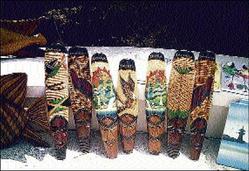
Jamaican-made masks on display. Under the new Cariforum-EU Economic Partnership Agreement, works of arts and artists are to have easier access to Europe's markets.
This is the first in a series of articles on the new Economic Partnership Agreement between Cariforum and the European Union, exploring its implications for various industries.
Perhaps the most innovative part of the whole 1,000-plus pages of the text of the Economic Partnership Agreement (EPA) that will be signed between Europe and the Caribbean in March in Barbados, is its protocol on cultural cooperation.
In the closing days of the negotiations, achieving European agreement on this issue became central to the region's willingness to compromise on other matters.
Then, Barbados' Prime Minister, Owen Arthur, made clear that liberalising access for the export of Caribbean cultural and entertainment products was "a line in the sand" for the Caribbean.
His remarks reflected recognition by Jamaica, Trinidad and Tobago and other more developed regional economies that without access to the EU market for those involved in the region's hugely valuable creative industries there would be no EPA: the Caribbean had to see gain in a sector in which it excelled.
High profile
The high profile given to the issue was also intended to ensure popular political backing, should the negotiations fail.
So, what does the final EPA text offer in the way of cultural trade and cooperation and how might Jamaica's artists, musicians, performers, writers and others in creative industries benefit?
A departure point is to know that there are three sections of the EPA that particularly apply to those in the creative arena.
While the principal relevant text appears as a five-page protocol on cultural cooperation, other language of importance appears elsewhere on issues such as the protection.
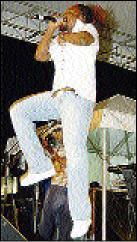
A performer on stage at the All Spice Show, July 28, 2007. Under the new Cariforum-EU Economic Partnership Agreement, works of arts and artistes are to have easier access to Europe's markets. - Winston Sil/Freelance Photographer


















