File
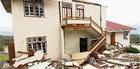
Damage to Bethlehem Moravian Teachers' College in Malvern, St. Elizabeth, done by Hurricane Dean in August. The storm's damage was placed at $23 billion islandwide.
Sabrina N. Gordon, Business Reporter
Even with national polls imminent and the uncertainty of when the election would be called, the year started out with positive expectations for the economy, no small part of which was momentum carried over from the peak 2.5 per cent growth in 2006 - a level not seen in decades.
The predictions for 2007 began with strong expectations that Jamaica would grow by 3.0 per cent.
And for the first half of the calendar year, real GDP was ahead of the comparative period for last year about 2.1 per cent.
Analysts meantime have marked the year as fairly positive, with room for improvement.
"As far as 2007 is concerned it was not a bad year, but there are areas of concern that we as a country need to deal with," said John Jackson, publisher of the financial magazine Investor's Choice.
The concerns, he says, relate primarily to surging imports and the pressure they have placed on foreign exchange earnings, and consequently the net international reserves.
This indicates, he said, an underlying weakness of the economy, which needs to be addressed urgently - suggesting that a sharp reduction in the fiscal deficit will facilitate a speed up of economic growth.
For economist Errol Gregory, the key is contained spending.
"In light of the Government keeping a tight rein on expenditure moving towards a balanced budget, associated with a greater thrust to increase tax compliance and the number on the tax roll," he said, "the year should see improvements in the critical macro economic variables reflected in positive economic growth and social cohesion."
Nominally, the country's earnings rose to more than $124 billion in real terms in the first six months to June 2007, or two per cent higher than the comparative period in 2006, according to Statin's numbers - representing growth of 1.86 per cent in the March quarter and 2.3 per cent for June. Annualised, the economy will likely grow 1.2 per cent currently.
Narrowing current account deficit
But reality intervened in the form of rising commodity and oil prices, a devastating storm in August that struck the agriculture and mining sectors especially, and unfavourable international conditions particularly the credit crunch that flowed from the subprime mortgage crisis in the U.S. financial markets, and the falling U.S. dollar, which lost out against its peers.
In Jamaica, the consequence of the latter was not a cheaper U.S. dollar but more expensive pound sterling, Canadian and euro currencies. The U.S. currency is also the most expensive it has ever been, vaulting the Jamaican currency above the $70 mark.
Export cost increase
Consequently, imports were a lot more expensive, but the shifting currency markets also boosted income from exports like sugar which is priced in euros, and was one of two commodities that the Bank of Jamaica has credited with helping to narrow the current account deficit at the end of July.
The elections were eventually announced around mid-year, and as is traditional, businesses and the financial markets became a lot more cautious in their dealings largely in anticipation of a change of government.
The stock market, which was bearish coming in to the year, remained subdued, while the foreign exchange market began a slow slide in what was characterised as speculative hoarding.
Then came the change of administration at the top of September when the Portia Simpson Miller-led People's National Party was defeated at the polls by Bruce Golding's Jamaica Labour Party.
A period of transition followed, with a new finance team taking charge of the treasury at National Heroes Circle - Minister Audley Shaw and his Ministers Without Portfolio, Senators Don Wehby and Dwight Nelson.
The stock market remained depressed for a while but positive reactions to a pending takeover of Lascelles, and latterly, speculation about plans for a similar move on The Gleaner, has sent the main index soaring above 107,000 points on Christmas Eve.
Not unexpectedly, the Planning Institute of Jamaica reported that growth was a marginal 0.5 per cent in the September quarter - Statin's numbers are not yet out to confirm the estimate.
Chief economist and PIOJ director general Wesley Hughes continued to telegraph a positive outlook, predicting at his quarterly press briefing in October that the December quarter would see growth of 1.2 per cent on the back of services and tourism.
The goods producing sector is forecast to decline by 0.6 per cent in the October-December period, while services is projected to increase 2.4 per cent for overall growth in GDP of 1.2 per cent, by PIOJ's measure.
That forecast was overshadowed later by the International Monetary Fund's prediction that Jamaica would end the full year with only 1.4 per cent growth, in a return to its 2005 position, having recast the numbers in October.
However, the fund expects that the island will regain some momentum in the coming year to realise growth of 2.0 per cent.
At the top of the fiscal year, the former PNP administration had projected inflation at 6-7 per cent, a fiscal deficit of 4.5 per cent, and net international reserves (NIR) of US$2.2 million, all wrapped around an exchange rate of $71 to the USD.
The Jamaican dollar is now hovering above that mark, having depreciated to $71.39 at one point, but was only contained in its fall by very strong intervention by the Bank of Jamaica. One of the consequences, however, was a weakened NIR, which fell to US$1.91 billion, the BOJ having admitted in November to flooding the forex market with US$1billion of liquidity during the year to buoy the JMD's value.
Inflation was also derailed, largely fed by increasing world commodity prices and the higher cost of business and consumer goods and food resulting from Hurricane Dean's swathe of destruction on banana, coffee and other agricultural crops, as well as damage to infrastructure and industries.
The fiscal deficit was recorded at $28 billion in October, but continues to perform better than the projected $36 billion in the 2007/08 budget, though government has to be working into the figures some $15.5 billion of spend that was not originally programmed, plus costs associated with hurricane recovery; while the primary surplus, which backs out the cost of debt and interest charges, was ahead of expectations at $30.7 billion.
Growth
The main impetus to growth in the first calendar quarter ending March was due to increased activity in construction, but also agriculture, transport, storage and communication and distributive trade sector.
Construction and installation industry grew by 7.0 per cent, while agriculture was up 4.0 per cent due to favourable weather conditions and improved productivity, while manufacturing took a dive mainly attributed to a decline of 2.5 per cent in food, beverage and tobacco production.
Manufacturing made a comeback in the second quarter, growing by 1.2 per cent, but it was construction and agriculture GDP that continued to offer the biggest boosters, growing respectively by 3.6 per cent and 3.0 per cent.
The mood turned in the July to September quarter when oil prices began their swift climb on the world market, adding to already expensive grain prices. According to the Bank of Jamaica average international prices of West Texas Intermediate crude oil and agricultural raw materials increased by 16.2 per cent and 2.0 per cent respectively.
Significant increase in the prices of international commodities was the primary influence on trade, resulting in a 6.0 per cent wider trade gap during the September quarter.
Locally, elections were announced for late August, but were delayed until September 3 to allow for recovery after Hurricane Dean hit on August 18.
Initiatives
The damage from the storm was estimated at $23 billion, placing an additional charge on the budget of about $9 billion in grant assistance and infrastructure repair.
Data from the PIOJ shows decline of 6.3 per cent and 8.6 per cent for the agriculture and mining sectors, respectively.
In the year ahead, the watch is on to determine whether the Golding administration can deliver on his promise of growth.
Initiatives like the Offshore Financial Centre, a reformed tax structure, tighter controls on government spending and divestment of loss-leaders like Air Jamaica and the sugar industry, reduced turnaround time for approving projects from years to 90 days, and other programmes to enable the private sector and motivate investors to spend are under watch locally and internationally to see if they can deliver as springboards to a more robust economy.
The Government, according to its manifesto, wants to establish Kingston as a "choice location" for offshore financial services.
"This will be sited in downtown Kingston as a fulcrum for the much needed redevelopment of that part of the city," said the manifesto.
Some of that monitoring is external, however, with the IMF already on record with its concern that too generous a tax programme, (read incentives), could manifest in a larger deficit.
sabrina.gordon@gleanerjm.com
Major currencies vs JMD (Spot Rates December 24, 2007)
Canadian 71.14 Euro 102.87 Pound Sterling 140.21 US Dollar 70.94
Source: Financial Gleaner, Friday, December 28, 2007


















