Earl Moxam, Senior Gleaner Writer
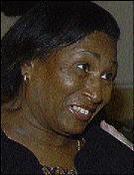
( L - R ) Nancy Anderson - Winston Sill/Freelance Photographer,
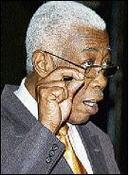
A.J. Nicholson - Ian Allen/Staff Photographer
Opposition Spokesman on Justice, Senator AJ Nicholson, is predicting that there will never be another execution in Jamaica unless legislation is passed to nullify the effect of the Privy Council's rulings in Pratt & Morgan and subsequent cases.
The United Kingdom-based Privy Council, Jamaica's final court of appeal, in the 1993 Pratt & Morgan case, established a five-year limit on the period in which death penalty appeals in the Commonwealth Caribbean must be exhausted. Failing that, the Law Lords ruled the convicted person's sentence must be commuted to life imprisonment, as to keep him on death row for longer would be deemed 'inhuman punishment'.
Lengthy appeals
Subsequent Privy Council rulings, such as those in the Neville Lewis and Lambert Watson cases, have, according to Senator Nicholson, only served to lengthen the appeals process and made it impossible to complete it before the five years are exhausted.
Senator Nicholson's assertions run counter to those of the current Minister of Justice and Attorney-General, Senator Dorothy Lightbourne.
Responding to questions posed last month by Mr. Nicholson, Senator Lightbourne insisted that the five-year limit could be met if certain steps are undertaken promptly.
These include ensuring that the transcripts of a trial are available within a specified time after conviction so that appeals can be heard by the Court of Appeal "within a reasonable time", and providing for the local Privy Council to consider the case of a condemned man "immediately after an appeal is dismissed by the Court of Appeal".
Thereafter, she said, the Jamaican authorities need to respond to the Inter-American Commission on Human Rights within a specified time and, "if necessary", pass legislation "to put a time limit on responses by the Inter-American Commission on Human Rights to petitions submitted to it".
The last government led by Senator Nicholson's People's National Party, complained consistently during the 14 years following Pratt & Morgan, that its hands were tied on the death penalty issue as a result of that and other Privy Council rulings.
Parliamentary support
It sought the parliamentary support of the Jamaica Labour Party (then in opposition) to enact a constitutional amendment nullifying the effect of Pratt & Morgan, following the example of Barbados.
That support was not forthcoming, and now that the JLP is in government, Senator Lightbourne is maintaining that the constitutional amendment is not necessary to resume hanging in Jamaica.
Senator Nicholson remains adamant, however, that such aspirations will not be met.
"If the steps outlined in her answer were sufficient to meet the five-year limit imposed by the Privy Council, why is it that Barbados did not just simply adopt those steps, instead of going to the length of amending their Constitution to do away with the five year stricture?" he asked.
Senator Nicholson has long maintained as well that the Privy Council was inconsistent in setting the five-year limit for the Commonwealth Caribbean, since the European Court of Human Rights has established a seven-year limit for its jurisdiction, which includes the United Kingdom.
In the meantime, Senator Lightbourne has confirmed that the Government will put the question of retaining the death penalty as Jamaica's ultimate criminal sanction to a conscience vote in Parliament.
This, she says, is in keeping with a recommendation made by the Charter of Rights Committee, which was chaired by Mr. Nicholson when he was the justice minister.
In response to another question from Senator Nicholson, she said the Government was not contemplating holding a national referendum on the issue.


















