
Tony Williamson
"When I refuse to forgive, I am burning a bridge that someday I will need to pass over."
- John McDowell
When I was a little boy, I remember hearing someone say the following in response to a wrong done to her: "I will never forgive him until the last nail rattles over my head in the coffin."
As a young boy, I did not fully comprehend the seriousness of what she was saying, but, instinctively, I knew something was drastically wrong with a statement like that. It spilled vitriol, venom and vexation of spirit. Why would someone want to die with unforgiveness in his or her heart? Later on in life, of course, I came to understand the shattering significance of such a statement, a statement that said, "I hate you so intensely I will be ushered into eternity with this hate against you." Then, what does this mean for you?
Apparently, some people, like old John who was dying, have a slightly different take on forgiveness and death. Old John was on his deathbed and, with time running out, he wanted to make things right with his friend Sammy they had been best friends, during recent times their friendship had soured and they were at odds with each other. In fact, in the last few months they had not spoken to each other at all. Not wanting to die with matters unresolved, John sent for Sammy.
Apology
When Sammy arrived at John's hospital bed, John apologised for the part he had played in damaging their friendship. John said he was afraid of entering eternity with animosity between them and wanted to make things right before he died. Then John reached out for Sammy's hand and said, "I forgive you, Sammy. Would you please forgive me?" Sammy was moved to tears and he also quickly forgave John. Just as Sammy was leaving, however, old John shouted after him: "But remember, if I don't die and somehow get better, this doesn't count!"
Forgiveness, however, is not just about your death. Forgiveness has everything to do with your life. To forgive is to set aside a hurt or wrong done to you, to treat it as if it never occurred, to release the person who offended you and let him or her off the hook. Bitterness and internal anger can have both psychological and physical side effects. Bitterness creates tension within; tension creates stress. Stress may result in a vast array of maladies - from insomnia to ulcers, from high blood pressure to stroke, from mental anguish to dementia. Unforgiveness is like a great stone tied to your back, a crushing weight that you carry around with you everywhere you go, while the offender walks free as a bird, as light as a feather.
Deep-seated hatred
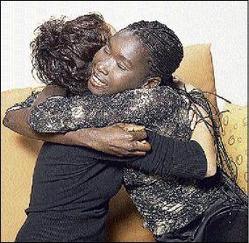
During the 1970s, my friend, the late Rev. Derek Prince, told a group of us a remarkable story of an encounter with a woman who had come to him for prayer. The woman was bound so badly with an arthritic hand, she could barely move her fingers which were curled up into a ball. During the conversation with the woman, Rev. Prince realised she was carrying a deep-seated hatred of her father. I reconstruct the conversation between Rev. Prince and the arthritic lady:
Prince: "You must forgive your father."
Woman: "I cannot forgive him."
Prince: "You have to release your father. Go and tell him you forgive him."
Woman: "I cannot do that. I cannot forgive him."
Prince: "Why can't you forgive him?"
Woman: "Because he is dead."
Rev. Prince told the lady that the forgiveness was not for the benefit of her deceased father, but for her own benefit. She should go to his grave, speak over the tombstone and say, "Father, I forgive you for all the hurt you caused me." The woman obeyed and the moment she forgave her father, she was healed of her arthritis - no further need for prayer.
If this story is true, and I believe it is, could forgiveness be an act of enlightened self-interest?
Read more on the topic of forgiveness next week.
Tony Williamson is a motivational speaker. Email tonywilliamson_57@yahoo.com.


















