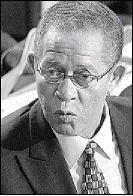
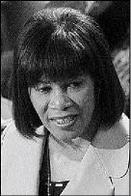
Left: Bruce Golding, Prime Minister. Right: Portia Simpson Miller, Opposition Leader.
Members of the newly elected Parliament will meet for the first time a week from today, on Thursday, September 27. The main item of business on the agenda will be the swearing-in of the MPs and the new Speaker, Delroy Chuck and his deputy.
And, with the two major political parties almost evenly matched coming out of the September 3 General Election, two veterans of the parliamentary process are predicting that the members will have to be vigilant in their attendance to avoid difficulties in the legislature.
"Because it is a close Parliament the Government members will realise that if they do not attend and attend on time, the Government could be brought down," was the stark warning from Headley Cunningham, who served as Speaker from 1989 to 1993.
No-confidence vote
The Opposition members, if they are alert, could seek to outmanoeuvre the other side and move a vote of no-confidence in the Government, Cunningham told The Gleaner.
He conceded, however, that Parliament would have to be given notice of this intention to have a no-confidence vote. This, he said, should give the Government time enough to muster its members and thwart the no-confidence motion by moving and passing a counter-motion expressing confidence in the administration.
Anthony Johnson, a veteran of both the Upper and Lower Houses of Parliament for the Jamaica Labour Party (JLP), is not convinced the new government, holding a 33-27 majority, is in any danger of falling during the life of this Parliament.
Vigilance
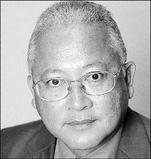
Left: Delroy Chuck, Speaker of the House.
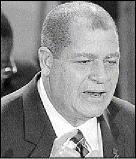
Right: Audley Shaw, Minister of Finance and the Public Service. - File photos
He believes, however, that the situation will demand good attendance and vigilance on both sides.
"A close election is extremely good for democracy in that it gives all members of the House a tremendous leverage because the leadership is aware that the balance is close and, therefore, it is not possible in any way to act outside of the arena in which everyone has a level of comfort," he said.
Accordingly, Johnson is predicting that the chief Government whip and his opposite number will be "applying tremendous pressure on their members" to keep them in line.
For the passage of most bills, a simple parliamentary majority of one is all the governing party requires. With its six-seat advantage, therefore, the JLP will have to ensure that it retains numerical superiority at all times; failing which, its initiatives could be defeated by the Opposition People's National Party (PNP).
The 2002 General Election produced a result almost as close, with the PNP garnering 34 seats to the JLP's 26 - an eight-seat difference. That advantage grew somewhat late in the parliamentary term, when two defectors from the JLP - Verna Parchment from North West St. Ann and Abe Dabdoub from North East St. Catherine - crossed the floor to join the Government side.
Nevertheless, there were occasions in which the PNP came close to being in the minority position in the legislature due to the absence of some of its members for various reasons; most often because members of the Cabinet were abroad or elsewhere in Jamaica on official business.
For the parliamentary year, April 12, 2006 to March 27, 2007, there were 46 sittings of the House of Representatives. Prime Minister Portia Simpson Miller missed 16 of those sittings, as official duties saw her being away from Jamaica on several occasions. Parliamentary records indicate that those engagements included CARICOM meetings and an official visit to Brazil.
Dr. Peter Phillips, Leader of Government Business in the House in the last administration, missed 17 of those business sessions, mostly due to his other obligations as Minister of National Security.
Among the other Cabinet members, Phillip Paulwell missed 13 sittings, as did Horace Dalley. Dean Peart was not available for 10, Roger Clarke, nine, and Derrick Kellier, six.
JLP members had a good record of attendance, for the most part, during the life of the last Parliament. In the year under review, Opposition Leader Bruce Golding was absent on only four occasions. Audley Shaw, the party's spokes-man on finance, missed six sittings. Karl Samuda, another member of the Opposition's front bench in that Parliament, missed eight. Derrick Smith, the Leader of Opposition Business, was there for all but two meetings, while Clive Mullings missed three.
Chuck to keep tight rein
Now that the tables have turned and the JLP is in charge of the new and very competitive Parliament, Prime Minister Golding has appointed Delroy Chuck, a lawyer by profession, to be the new Speaker, to keep a tight rein on proceedings.
Chuck's attendance record for 2006/2007 seems to have prepared him for the challenge, having made it to 43 of the 46 sittings.
Reflecting on his tenure as Speaker, Headley Cunningham believes Chuck could have an easier time getting the members to follow the rules than he did.
With a massive majority to the governing party in the 1989-1993 Parliament, the Speaker said he had great difficulty at times getting the members to attend sittings on time and remaining alert during proceedings.
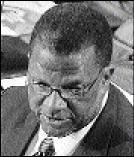
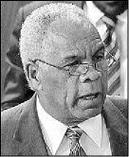
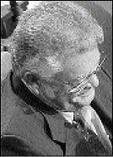
( L - R ) Opposition member Dr. Peter Phillips, Dr. Omar Davies, Opposition member, Karl Samuda, Minister of Industry and Commerce. - Rudolph Brown/Chief Photographer


















