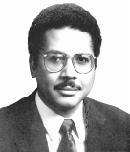
Stephen Vasciannie Very often, popular discussion on globalisation gets ensnared in definitional problems; but whatever definition we take, it is clear that modern globalisation connotes, among other things, the idea that there should be the reduction and then the total elimination of trade barriers between states. The removal of trade barriers is consistent with the free market ideology associated with economic liberalisation, and has been an important plank for Western initiatives within the World Trade Organisation, the International Monetary Fund, and elsewhere.
Some developing countries have not been anxious to embrace free trade, essentially on the grounds that it will be inimical to our economic interests.
So, for example, CARICOM states, acting individually and as a group, have put forward various arguments in defence of protectionism, particularly the protectionism that takes the form of preferential access to European markets for traditional goods such as sugar, bananas and rum. CARICOM states have also retained, to the fullest extent allowed, customs duty regimes that will enhance the local revenue.
To support this anti-liberalisation and therefore anti-globalisation perspective, CARICOM has offered at least four arguments. Two of these are based on history. In the first place, as colonies of Britain, we were established and structured as primary-producing entities, dependent on mercantilist, protection-based measures. Thus, it is said, Britain structured us this way, and should retain preferential approaches to us based on that historical fact.
Reparation
Second, protectionism is sometimes rationalised as a means of reparation for colonial exploitation. Perhaps this argument cannot publicly be accepted by the former colonial powers, for it involves admission of guilt for the colonial period, but it seems to be inherently incorporated in the preferential arrangements associated, for instance, with the Lome and Cotonou treaties, and in aspects of the Economic Partnership Agreements under consideration between Europe and the former colonies.
Third, developing countries often present the case for preferential treatment with reference to justice and equality. In the case of CARICOM, the argument would be that we should receive preferential treatment in trade matters so that we may attempt to overcome some of the basic and pervasive problems facing Caribbean people.
Fourth, developing countries have countered aspects of the free trade philosophy by pointing to instances of Western hypocrisy. In several instances, developed economies have been built on protectionist measures; so, the argument runs, developing countries should be given the opportunity to do so as well.
In some instances, reference is also made to the protectionist policies that have helped the strongest developing countries. And, of course, the point is reinforced by the fact that some developed countries still protect particular industries, with steely intent.
Therefore, protectionism has its supporters and its supporting arguments. So, too, however, does free trade. Specifically, those in favour of the neoliberal free trade model place much store on arguments pertaining to efficiency and the interests of consumers. As to efficiency, free trade clearly promotes competition in various sectors, and this will ensure high levels of performance without governmental interference (the invisible hand of Adam Smith still works).
Free Trade
Greater efficiency will also work to the benefit of consumers. This is the natural effect of competition: as more producers enter a sector, there is a tendency for consumer prices in that sector to fall, as no one producer can exercise monopoly power.
In the end, the tide of free trade is powerful, but it has not yet fully overpowered developing countries. If globalisation persists on its current course (and there is reason to believe that it will), developing countries would be well-advised to identify new economic opportunities to bolster the traditional sectors that will come under increasing pressure as the world reorganises its trade rules.
Stephen Vasciannie is professor of international law, UWI, Mona, and works part time as a Deputy Solicitor General at the Attorney-General's Chambers.

















