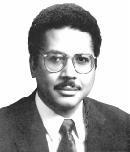
Stephen Vasciannie Last week, with the drums of Boys and Girls Championships gradually rising to their traditional crescendo, Patrick Robinson launched a publication entitled "Jamaican Athletes: A Model for the World" at the Terra Nova hotel. Robinson's book is a tribute to the tradition of Jamaican supremacy in athletics, and in particular, to our justifiable claim to be the sprint capital of the world.
The book is not a chronological account of our sporting successes in track and field. True, there are vivid descriptions of successful performance from the time of the famous four - Wint, McKenley, Rhoden and Laing - in the 4x400 at Helsinki, through the achievements of Miller, DQ, Ottey, Jackson, Cuthbert, and Hemmings, on to the current exemplars of greatness, the 4x100 women from Athens, and the dominant Mr. Powell. But, the approach is not descriptive. Rather, Robinson asks the question: why are we so strong in international athletics? What factors mark out this small country as King of the Game, with a per capita rate of success matched by no other country?
Rich Analysis
Various explanations are offered in Robinson's rich analysis, and there is a special tribute to Stephen Francis and his colleagues at the MVP track club for fully nationalising our successes, so that promising athletes are no longer obliged to travel to North America to convert potential to performance. But, according to Robinson, if you seek the central explanation, you must go to the Holy Grail of Boys and Girls Champs.
The annual arrangements for the Caribbean's premier track meet - if not the premier track meet for boys and girls in the world - represent both the climax of the school athletic year, and the foundation for international success. And so, ultimately, Robinson's book, which was published in consultation with other familiar, and familiarly knowledgeable, sporting names such as Jimmy Carnegie and Laurie Foster, brings home to the reader the true significance of Champs to national life in Jamaica. On the quality of Champs, Robinson observed, in line with Carnegie, that Norman Manley's time in the 220 yards at the 1911 Boys' Champs would have placed him in the Olympic finals in both 1908 and 1911!
Naturally, the publication derives much of its authority from the name and provenance of the author. Patrick Robinson is a judge on the International Tribunal for the former Yugoslavia, and not just any judge, but the judge who presided over the trial of the former Yugoslavian dictator Slobadan Milosevic: in short, one of the most prominent international judges in the world, as noted by Professor Munroe in his main address at the launch of the book.
Robinson has also been a member of the International Law Commission, and a Deputy Solicitor General in Jamaica. In his level of achievements, there is another aspect of the book that I would like to mention. In how many countries, would a leading jurist take the time, and make the effort, to write a book about athletic success? It could happen elsewhere - as senior figures in the American polity are apt to sing praises to baseball as a cultural phenomenon - but the love and understanding shown by Robinson for Jamaican athletics is outstanding.
This factor, I suggest, also helps us to understand our successes in athletics. All of us - from the highest judge to the sky juice, snow cone, snowball vendor - are equal parts of this tradition of success, and we encourage those with talent to reach for the greatness that is available through sports. With unity of purpose, and a continuity of effort that is unmatched in other areas of national life, we have been able to succeed.
Stephen Vaciannie is professor of international law at the University of the West Indies, and works part-time as Deputy Solicitor General in the Attorney-General's Chambers.
Cricketers
As the fluctuating fortunes of the famous cricketers now bring us through the valley of inconsistency, some may well be inclined to ask why we cannot reproduce athletic success on the field of cricket. In some respects, we have, for the achievements of the cricket teams led by Clive Lloyd and Viv Richards - obviously - placed us head and shoulders over all competitors. And our individual cricketers, Headley, Sobers, Lara, Walsh and Holding, for example, have set standards at the highest level. Cricket, though, is not as universal as athletics, and the dominance of our athletes has probably been more protracted than that of our cricketers.
Reluctantly, too, it may be observed that cricket, as a West Indian sport, pulls from a wider reservoir of talent than does Jamaican athletics. For a true comparison of athletic success versus cricket success, we may have to use Jamaican cricket as the base for comparison with Jamaican track and field - and when we do that the comparative quality of the output in track and field is readily apparent.
But we should also note that Jamaican achievement in other areas can match the world. Last week Kingston College and Calabar faced off in the finals of the Schools' Challenge Quiz competition. It occurs to me that either team could beat any group of four students from the best of secondary school system from any country in the world. The quiz people too are King of their game.


















