Robert BuddanMarch 13, the day of the opening World Cup match between the West Indies and Pakistan, marked 40 years since the death of Sir Frank Worrell, the first great West Indies cricket captain. March 6 and March 8 marked 10 years since the deaths of Cheddi Jagan, former President of Guyana, and Michael Manley, former Prime Minister of Jamaica. All three were great Caribbean regionalists and supported regionalism in politics and cricket. March 11 signalled the combination of both regionalism and cricket with the opening of the Cricket World Cup bringing the greatest honour to Caribbean sports and people.
In the midst of all this, on March 12, Christine Cummings in the Department of Government at UWI held a panel discussion to commemorate Sir Frank's death, and legends such as Rohan Kanhai, Lance Gibbs, and "Gerry" Alexander told us of the special importance of Sir Frank as a cricketer and a Caribbean person. The occasion reminded us that when Sir Frankleft Barbados to live in Jamaica, he said he had not done so because he loved Barbados any less but because he hated the insularity there.
Regionalism
Sir Frank wanted to be a regional person and he found Jamaica, and eventually, the Mona campus of the UWI, a better place to be a better person. Sir Frank put regionalism ahead of national insularity to the extent that when there was talk of Barbados going on its own in Test cricket, Sir Frank, dying at the time, expressed the hope that Barbados would fail and give up hope of forming a Test team by itself. The West Indies remained a team as it had been.
Sir Frank had built the West Indies into world champions between 1960 and 1967 as captain and manager. In those years they beat all the Test-playing countries. It was for that reason he wanted the West Indies to stay together, and it was by staying together that they became phenomenal teams of the 1970s and 1980s, worthy of hosting today?s World Cup.
It might not have been an accident that after the West Indies beat England for the first time in 1950 in a series, Jamaica?s two political parties and the rest of the region agreed in 1951 to form a federation of the West Indies. West Indian pride suffused the region and Jamaican leaders on both sides of the House of Representatives used the victory as evidence of what the region could achieve together, and as confirmation that a country like Jamaica was indeed fit for self-government.
The often-reluctant JLP and the regionalist PNP came to their first golden period of political consensus from 1951 on three great issues of the day federation, self-government, and their importance to development strategy.
In mid-1951, Edwin Allen of the JLP voiced his support for federation saying, "The West Indies have come together in many matters and acted as a unit. Indeed, we only have to think of the world of sports. It is not a Trinidadian or Jamaican or Barbadian cricket team that will be proceeding to Australia where we hope to do what the last team did in England.And we can think of the West Indies distinguishing themselves in the Olympic Games, not as Jamaican or Trinidadian or so on, but as West Indians. Again, we have in our midst not a Jamaican university but a University College of the West Indies. All these are only instances of our getting together, and I can only hope that when we get together in a political way, some measure of success will attend us in the efforts we have made to get together in the field of sports and the successful efforts we are making in getting together in the field of learning."
Jehoida McPherson, another member of the JLP, was proud that the West Indies had brought the Englishmen to their knees in 1950. To him, cricket was a form of federation and was a model for federation in labour, agriculture, and industry, as well.
The JLP was the majority party in the House at the time and the inspiration of West Indian runners at the Olympics in 1948 and cricketers in England in 1950 caused Rose Leon to move a resolution in 1951 for the construction of a national stadium. But the colonials controlled the purse strings of government, which was a reason Jamaicans had come to insist on self-government. For instance, Bustamante had asked Leon to bring the resolution and he would try to get the Governor to approve "50,000 towards the estimated "100,000 cost of the stadium.
Money to build stadium
The colonials, not known to have a vision for Jamaica or to recognise the talents of West Indians, did not approve the money. It was not until ministerial government was introduced in 1953 and the PNP formed the government in 1955 that Jamaican leaders voted the money to build our stadium.
We completed our national stadium in time to launch the Jamaican flag there at Independence. That independence gave us the power to decide on our own to build a multipurpose sports stadium in Trelawny and upgrade Sabina Park. We now have two world-class facilities and have hosted a world-class opening ceremony and World Cup cricket matches widely praised for their standards. Jehoida McPherson would have called the World Cup a federal arrangement, and Edwin Allen would have added that this demonstrates what we can do together.
Norman Manley was clear that nation-building required investments in the arts and sciences, in culture and sports; and that the spirit of a nation is as important to invest in as the economics of nationhood. In these respects, the high costs of the national stadium and arena have been repaid many times over, just as the cost of the Trelawny and Sabina Park facilities are already paying for themselves in the pride and spirit of nationhood and regionalism.
PARTNERING WITH PEOPLE
But as a special touch, the Cricket World Cup has partnered with UNICEF and UNAIDS to draw attention to the perils of HIV/AIDS to children around the world. Bruce Golding had supposedly said that we should not have spent money on the World Cup.
The fathers of his own party did not view development narrowly, and besides, the World Cup is devoted to children?s health around the world. Sir Frank Worrell, Michael Manley and Cheddi Jagan would have approved.
Under the theme, "Unite for Children, Unite against AIDS", the UN, ICC, and the Caribbean Media Corporation are running a campaign using cricketers in public service broadcasts to raise awareness about the disease. At the UWI seminar to honour Sir Frank, we were told that when an Indian batsman was struck on the head in a match against the West Indies and required surgery, Sir Frank was the first to rush to donate blood. UWI is planning to launch a series of blood drives in honour of this great humanitarian. Cricket does unite people in so many ways, just as the Caribbean can unite so many around the world.
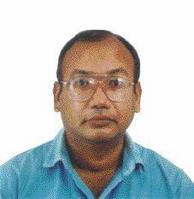
■ Robert Buddan lectures in the Department of Government, Mona, UWI. Email: Robert.Buddan@uwimona.edu.jm



















