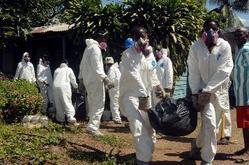
Workers removing materials containing asbestos from sections of the Succaba Pen community in Old Harbour, St. Catherine, yesterday. - Ian Allen/Staff PhotographerRasbert Turner, Gleaner Writer
SPANISH TOWN, St. Catherine:
The University of the West Indies' Chemistry Department has undertaken an asbestos removal exercise in the Succaba Pen area of Old Harbour, St. Catherine, at a cost of $6.5 million.
The project, which is funded by the Environmental Foundation of Jamaica, is about 90 per cent completed. Tonnes of asbestos that were being used for housing foundations, roadways, flowerpots, culverts, roofing, gateposts, and even to fill a pond in the area, are being removed.
When The Gleaner visited the North Street, Ascot Drive and Succaba Pen communities yesterday, several large piles of the potentially cancer-causing asbestos were seen dug up and placed for removal to the Riverton landfill.
Potential health hazard
According to Professor Ishenkumba Kahwa, head of the UWI Chemistry Department, the aim of the exercise is to rid the community of over 500 households, of the potential health hazard. He explained that the inhalation of asbestos dust can cause lung and other cancers. The aim, he said, was to make the area asbestos-free.
The Succaba Pen residents have been living with the asbestos threat for over 30 years as the old asbestos factory previously operated in the community.
Community members told The Gleaner that they were happy that the removal exercise is under way as for long they have been living in virtual ignorance as to what asbestos could do to their health.
"I have been living here for 30-odd years and I feel good that they are removing the dangerous pipes because all along I did not know it could harm us," said Daphne Jones, a senior citizen.
Several councillors, including Derval Weir and Esworth Frankson, had been agitating for years for the removal of the asbestos pipes and they, too, have given their blessing to the current removal exercise. The actual work is being carried out by residents of the community with technical assistance given by personnel from the UWI's Chemistry Department. It is set to last for six weeks.



















