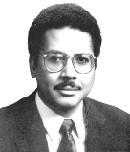
Stephen Vasciannie
There is a proposal that the Ministry of Education should do more to encourage greater variety among students in secondary schools. The proposal has come most recently from the task force set up by Minister Maxine Henry-Wilson to consider the reasons for the relatively late delivery of GSAT results last year. The essence of the proposal seems to be that the Ministry of Education should place some students who have achieved high marks in the GSAT at schools that have not normally received high-performing students.
My personal reaction to this proposal is one of mixed feelings. In Jamaica today, secondary schools tend to fall into at least three categories in terms of general performance. In the first category are those schools that carry the vast majority of their students through the school-leaving examinations after five years. And here, for the avoidance of doubt, I am referring to the CSEC school-leaving examination administered by the Caribbean Examinations Council (which probably should be abbreviated as CEC, to set an example to students).
Best Schools
These are our best schools, and they have standards that can make us proud. They get the best students from the preparatory and primary systems, push them, and the results follow. They are examples of the notion that the rising tide raises all ships, for even students of average ability are prompted to raise their game in order to match the comparatively high standards about them. Some of the students at these top schools will take the Caribbean Advanced Proficiency Examination (CAPE), but increasingly their objective is to tackle the American Scholastic Aptitude Test and take off to the United States. The best schools produce scholarship winners almost every year. Schools in the first category sometimes obtain financial support through the Church and through parents, and are thus able to retain a strong teaching body.
Below the best schools are those in the second category. These schools cannot normally promise that most of their students will get good passes at the CSEC level. They can, however, advertise the fact that their best students (let's say one in four for argument's sake) will do well in the school-leaving examination. And, from time to time, they will produce national scholarship winners, outstanding students who provide welcome evidence that standards are being maintained at some of our older, traditional institutions.
Some of the schools in this category are rural secondary institutions that are regarded as the premier schools in their respective parishes. Some of the schools in this category also rely on past students - directly or indirectly - to assist in the maintenance of standards. These schools tend to attach more significance to success at sporting endeavours than do the top schools, and they use evidence such as performance in the Schools' Challenge Quiz as an index of the general state of teaching and learning in the classroom.
Schools in the third category do not have the academic track record of their counterparts. They are usually not in a position to send entire classes to tackle the CSEC examination, and they do not have the tradition of past student support (and especially old boys' support) available to schools in the second category. These schools, like others in the second category, can rely on dedicated, committed teachers, but they face resource challenges, and are yet to overcome difficulties arising from physical location, social attitudes and newness.
Short Cut
In this context, the proposal from the task force can be justified as an effort to assist schools in the third category to come more fully on to the CSEC track. In most instances, schools in the third category receive very few students who have the requisite foundation for fully rewarding secondary school study, so most students are forced on an assembly line which has no clear promise of academic achievement after five years. The proposal could possibly lead to an improvement, in that schools in the third category may achieve a greater level of academic success after five years.
But, my mixed feelings come about because I doubt the fairness of using children to improve a system that should be improved in other ways. And, there is no guarantee that the strategic placement of some students will actually lead to a sustainable improvement of results. Besides, if the students, as a matter of free will or parental will, push themselves at the GSAT level to get into schools in the first or second categories, I am not sure that the State should interfere with this process.
Fix the schools in the third category by funding them more adequately and by encouraging teachers with excellent records to assume positions there (using incentive schemes). But be careful about forcing people to attend schools as an exercise in social engineering. This approach may remove the incentive for hard work at the GSAT level. It is a risky short cut.
Stephen Vasciannie is Professor of International Law at the University of the West Indies and works part-time in the Attorney General's chambers.