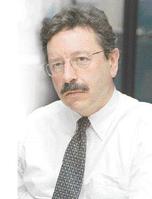
David Jessop
As each day passes, the world seems an ever less certain place.
The old order that divided foreign from domestic policy and saw each as somehow separate, has ceased to have validity.
Issues such as escalating energy prices, the war on terrorists and the response to economic globalisation have made politics less a matter of conviction and more a question of being able to react rapidly enough to circumstance.
Superimposed on this is a new global reality, a world order that is in flux as states with different capacities, objectives and global views vie for regional hegemony and seek to expand their economic space and wealth.
Thus a newly assertive Russia, through the judicious exercise of its energy policy, is finding ways not only to escape from its post-cold war economic uncertainties but in the process, has found that it can rekindle Russian nationalism by challenging the prevailing United States and European consensus about the shape of the world.
In other ways, Iran too is moving rapidly to consolidate its strategic position. It sees itself at the heart of the Middle East and through a complex policy involving its emergence as a nuclear power, has begun to respond to the regional role of the U.S.
Through the provision of theocratic and practical leadership it sees itself eventually becoming the centre of a Muslim world that spreads from Africa to the eastern borders of Russia.
Elsewhere, India and Brazil and to a lesser extent South Africa, continue to develop as economic powers operating within the Western consensus but prepared to challenge the present regional economic and political hegemony of the U.S. or Europe.
Chinese growth
And then there is China, whose slow but inexorable rise to superpower status has yet to be fully understood by the world. One only has to look at the development of its sophisticated deep-sea naval fleet, its growing military capacity and reach, the economic empowerment of its vast population and its rapidly growing wealth and technological capabilities to see that within 20 years it will offer the world an alternative and most probably a more benign pole to the U.S.
Despite all of this, the parameters of Caribbean foreign policy remain for the most part unchanged since independence. Its three pivotal relationships endure: those with Europe, the United States and Canada.
Europe and the United Kingdom, in particular, are still seen as
having a special role, not least in balancing the perceived dangers from the too-close embrace of the United States, while Canada is seen as being in some hard-to-define way as a thoughtful friend.
This thinking has been reinforced by the specificities in all three relationships.
Time for reassessment
These are special relationships the Caribbean should not abandon. But in the multipolar world order that is now emerging, how might the region best ensure that its interests are taken greater notice of?
In much the same way as nations in Europe have undertaken a radical reassessment of their international interests, the time has come for the Caribbean to do the same.
There is a role for the University of the West Indies, foreign ministries, CARICOM, the Caribbean Regional Negotiating Machinery, the private sector and other interested parties in the region to identify how best to make the Caribbean's voice heard; the areas in which it might have better leverage; and, the ways in which non-traditional approaches might deliver more positive results for Caribbean states.
So what might be done? First, more focus could be placed on the ways in which diplomacy might be integrated with the mobilisation of the diaspora and a considered and properly-financed approach to lobbying agreed to maximise the role of formal diplomacy.
Secondly, the need to react in real time to the decision-making process in Europe, the U.S. or
elsewhere ought to be better understood. All too often decisions are taken in the EU, U.S. or elsewhere before Caribbean governments and industries are even aware of the issue.
Key capitals
Thirdly, the world in which the Caribbean now operates needs to be better recognised. The key capitals for the region are Washington, Brussels, London, Ottawa, Beijing, Brasilia, New Delhi, Pretoria, and possibly Tehran.
But for such broad representations to be viable, a common Caribbean diplomatic service with genuine economic, trade and political skills is required reporting, if needs be, to more than one ambassador and foreign ministry. Without this, the region's limited capacity and financial resources will never be overcome.
Fourthly, there ought to be greater definition of just what the Caribbean is seeking to obtain from its diplomatic services and from its ministerial encounters overseas. For most of the region the issues that are paramount relate to trade, security and development assistance.
Despite this, in some capitals those appointed have little background or experience of the minutiae of such issues. There is a strong case for secondments into and out of the foreign services so that ambassadors and more junior officers understand the dynamics and requirements of the key industries of the future such as tourism and the financial services sector, the complexity of trade negotiations and the impact of changes to
regulations.
And finally there is a need for serious study in Caribbean foreign ministries and academic institutions of how asymmetric responses to the external policy challenges that face the region might be developed; that is to say, an investigation of how nations as far apart in every sense as Brazil, Vietnam and Israel have managed to achieve results that materially facilitate their interests despite their relative lack of power.
Space does not enable me to address this latter point in detail but it is a theme I shall return to. However, suffice it to say that Trinidad's Prime Minister, Patrick Manning, has taken a step down this road in the last few weeks.
His decision to diversify his nation's energy relationship away from the US, his criticism of the US' failure to match its promises with action on security issues and his rebuke to Venezuela's regional aspirations, all suggest a nation that has recognised that there is no longer any utility in pursuing the policies or strategies of the past.
David Jessop is director of the Caribbean Council. Email: david.jessop@caribbean-council.org.