Tesi Johnson, Gleaner Writer
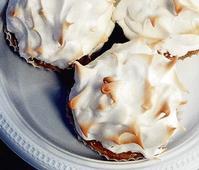
Lemon meringue tarts prepared by Susie's Bakery and Coffee Bar in Southdale Plaza,St. Andrew. - WINSTON SILL /FREELANCE PHOTOGRAPHER
Have you ever wondered what happens when food changes from one state to the next? Take the process of freeze-drying or making a ham for the Christmas dinner table. There are some reactions of a scientific nature that are at work to make food change from one state to the next. This week, Gleaner writer Tesi Johnson starts a new series that looks at what happens and why - in the entire process.
IT'S QUITE fascinating how egg whites transform from a clear runny solution to a fluffy white consistency just by whipping them with a whisk or electronic beater. A simple chemical process, which is offset by the introduction of air bubbles to the whites when you whip them, causes this transformation.
Egg whites are made of a water-protein solution and proteins are made up of chains of molecules called amino acids. Some amino acids are attracted to water, or water-loving (hydrophilic), and others are repelled by water, or water-fearing (hydrophobic). Egg white proteins contain both water-loving and water-fearing amino acids. Those amino acids that are water-fearing group together in the centre, away from the water, and those that are water-loving are immersed in the water solution, giving the protein its 'globular' shape.
WHIP THOSE WHITES
Now, when you whip the whites to make a merengue or soufflé, air bubbles are incorporated into the mixture. When an egg protein is exposed to an air bubble, part of that protein is exposed to air and part is still in water. The protein will uncurl, losing its globular shape, so that its water-loving parts can be exposed to the water and its water-fearing parts to the air. Once uncurled, the proteins bond with each other, creating a network that can hold the air bubbles in place. And voila, you have stiff peaks!
When you heat these captured air bubbles, they expand as the gas inside them heats up. When heated, the network surrounding the bubbles solidifies, and the structure holds firm as the air expands so much that the bubbles burst. So next time you bite into a slice of lemon merengue pie, just think - aha, that's how it came to be!


















