Dennise Williams, Staff Reporter
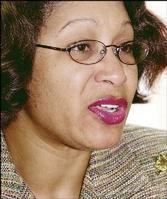
SHIRLEY
ALTHOUGH FIRST Global's much-anticipated initial public offer is on track for the last quarter of this year, the equally anticipated suite of mutual fund products from First Global Financial Services (FGFS) has met a legal snag.
A subsidiary of GraceKennedy, the First Global brand consists of First Global Financial Services, its stockbrokerage arm and First Global Bank, its commercial banking arm.
At issue is the fact that the Companies Act (2004), which allows for the registration of mutual funds in Jamaica, does not adequately address regulatory matters that arise during the day-to-day operations of mutual funds.
On April 1, 2004, Don Wehby, chief financial officer of GraceKennedy, and chief operating officer of the financial services division, announced that FGFS would be launching five new mutual funds.
NEW MUTUAL FUNDS
They would consist of the First Global Money Market Fund, First Global U.S. dollar Fixed Income Fund; First Global Jamaican dollar Fixed Income Fund, First Global Jamaican Dollar Balanced Fund and the First Global Jamaican Equity Fund.
At the same time, Mr. Wehby announced the listing of First Global on the Jamaica Stock Exchange before the end of 2005. He reiterated this intention last Wednesday, when he was speaking at a function at GraceKennedy headquarters on Harbour Street.
TAX DEFERMENT
However, also speaking last Wednes-day, Sandra Shirley, president of FGFS, explained that these products have been put on hold. Ms. Shirley explains, "Right now we are putting together our documentation and we have filed with the Registrar of Companies and we are in discussion with the Financial Services Commission (FSC) with respect to filing with them. But as you can imagine there isn't much more that we can do after that. We are still waiting for a tax regime with respect to the mutual fund industry. We need to know if mutual funds will enjoy tax deferment or some other tax arrangement."
According to Miss Shirley, although they were told that the recent legislation for the Companies Act that came out last month was supposed to be adequate to take care of the mutual fund product, that has not been done. "We are unclear as to the time frame for additional amendments that will be made to the regulation."
"For example, there is no differentiation between the voting shares that create the mutual fund company, and the non-voting shares that make up the market for mutual fund product. Imagine someone investing in an equity linked mutual fund product that trades daily. Because there are no exemptions between owner and investor the law in its current form would require us to file a report with the Registrar of Companies saying who bought shares, for how much and why each day," she said further.
Ms. Shirley argued that should the company repurchase those shares (because that is what a mutual fund does), it would have to file a report to say where the funding came from "in essence telling the world what our investors are doing each day. So, we wait for further clarification."
Although similar in concept to unit trust products where investors' money is pooled and then invested on their behalf, mutual funds have just recently been recognised by the Companies Act (2004).
Essentially, the difference between unit trusts and mutual funds was a legal one, which allowed the Government to restrict the number of unit trust licences issued. Therefore, to get around that restriction, several local financial institutions registered their mutual fund or index fund (another pooled investment product) in other jurisdictions such as the Cayman Islands.