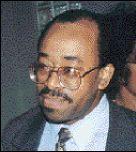
Dr. Hughes DR. WESLEY HUGHES, Chairman of the Jamaica Social Investment Fund (JSIF), has said that the organisation was moving to increase community ownership of and contribution to projects.
Speaking at the seventh Annual General Meeting of JSIF on Wednesday (August 27) at the Jamaica Pegasus Hotel in Kingston, Dr. Hughes said, among other things, the new approach would involve the utilisation of community-based contractors. In this way, residents would have greater autonomy over their own development, as they would have responsibility for the management and execution of the project.
"This approach seeks to enhance the capacity of communities to identify their physical and socio-economic needs, prioritise those needs and most importantly, identifying possible sources of funding," he said.
Dr. Hughes, who is also Director General of the Planning Institute of Jamaica (PIOJ), explained that to facilitate the smooth operation of the process, Project Management Committees would be formed, which would share the responsibility for the monitoring and reporting of projects with JSIF.
To further enhance community involvement in project management and execution, Dr. Hughes informed that JSIF would be putting a pilot project in place aimed at boosting the community's ability to execute multiple sub-projects.
FUNDED
To be funded by the Caribbean Development Bank (CDB), the initiative seeks to assists residents to identify those projects that "address the prioritised needs of a community and provide a more comprehensive solution to their development problems," Dr. Hughes said.
He said that the pilot programme would be implemented in the parish of Hanover, with the disbursement of US$1 million in three to four communities. "This pilot is expected to provide learning that will be used to inform national approaches to community development," he stated.
Turning to the National Community Development Project (NCDP), which was launched in February of this year and is being financed at a cost of US$15 million from the World Bank, Dr. Hughes said that beneficiaries would be required to make 11 per cent contribution of the cost of the project, up from five per cent.
"We anticipate that an increased community contribution will ultimately serve to enhance the sustainability of our interventions. Our experience has shown that the more a community invests in a project, the greater their sense of ownership of the facility. Therefore, our move to have communities more involved in project design and implementation will result in more sustainable interventions," he explained.
IMPLEMENTATION
The Fund's Chairman further stated, "we expect the implementation of the NCDP to reinforce our partnerships with local communities. At the same time, we will continue to strengthen existing links with government agencies, non-governmental groups, funding agencies, private sector entities and any other organisation committed to relieving poverty and developing the nation. Ultimately, we feel that the NCDP will be an effective component of the JSIF's contribution to poverty alleviation in Jamaica".
The JSIF was established in 1996 as part of a National Poverty Eradication Programme. It is aimed at providing social and economic infrastructure, social services and organisational strengthening support to poor communities.