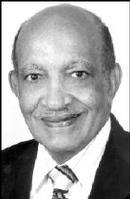
WynterHector Wynter wrote several columns for the Gleaner during his lifetime. One, 'How we misuse words' under the pen-name Mary Smith stands out especially among students and educators.
Many recall either writing or waiting to read about the words 'she' would discuss on Sundays. In many schools, they were cut out and used as teaching aids on charts in the classrooms.
Today we carry two of those articles.
A PARTICULAR DISPUTE AMONG WORDS
PARTICULAR IS a frequently used word in Jamaica. The word means especially, very specifically, in a particular or fussy manner. Examples are (a) she is particularly beautiful, (b) they particularly asked for you in a boisterous manner, (c) it is particularly true that he was a culprit.
The problem with the word is how it is pronounced. Almost every Jamaican tends to pronounce this popular adverb to sound like par-tik-u-laar-li with the stress on laar. Yet the word should be pronounced with the stress on the second syllable tik so the word should sound like pa-tik-u-la-li with the 'r' sound actually disappearing in two syllables par and lar.
So, please let us practise the pronunciation of particularly and of course particular which sounds like pa-tik-u-la.
TV ERRORS
Local television announcers have mispronounced a number of key words. We, who are concerned about the pronunciation and use of our English words, plead with those who are in key positions of influence to do their best in using words correctly in pronunciation and general application. A teacher has written to us thus:
"I was shocked when listening to the TV news on Thursday, March 9 to hear the bright male newsreader who is popular, mispronounce two words electoral and dispute and misuse the word presently. Could you please remind your readers of how to pronounce electoral and dispute, and how to use presently? We teachers are going through a most difficult time. For what we teach children in school tends to be destroyed on TV by the same evening".
That is a serious letter indeed. Let us look at the words raised. In Gleaner columns those words have been examined, but it may well be that the newsreaders do not read our column, or if they do, they have decided to ignore what we say.
ELECTORAL
This word is properly used in our country, but is so often mispronounced. The word should not be stressed on the third syllable tor as is done by the local television newsreaders. The word should be stressed on the second syllable lec, and should sound like i-lek-t(o)-(r)al. With the stress on the second syllable lec which sounds like lek, the o of to and the r of ral are hardly heard. Please try it readers, and if you do, you will see how beautiful the word is.
Electoral is, of course, an adjective which describes what relates to electors, those who vote, those who elect, those who choose. Once we stress the second syllable, the word becomes automatically well pronounced.
DISPUTE
As noun or as verb, this word must not be stressed on the first syllable di, as is done at local television stations, and elsewhere in our society. The word is correctly stressed on the second syllable spute. To dispute is to debate, to argue, to quarrel with, to discuss warmly, to question the truth or correctness of a statement, to resist, and indeed to strive to win as in "she is disputing the crown".
In Jamaica, we all use the verb "to dispute" correctly in meaning, but we forget that the word should not be stressed on the first syllable di, but always on the second spute. The noun dispute is pronounced exactly like the verb. A dispute is a quarrel, an argument, industrial action.
The word came into English via old French desputer from Latin disputare (to estimate).
Would it not be healthy for us all, if Latin was still taught in our secondary schools up to Grade 9 or 10? Our use of English would improve so much. But we will discuss this on another occasion.
PRESENTLY
We are grateful to the teacher for having written to us about the misuse of the word presently in our society. The problem here is that the United States influences us greatly via the media, especially the television and radio. In the U.S. presently is used to mean at present, now.
Indeed, in Scotland, it is used in that way also. But in England, whose English is still our official language, presently means soon, shortly, after a short time. Indeed there is no need to use presently when we wish to say now. Let us go now means one thing. But let us go presently means something else. It means 'let us go soon'.
Let us hope that those who read this column will pass on our comments on presently, electoral, and dispute (verb and noun) to the newsreaders at the television stations and in our general media.
PENCHANT
This delightful word is a noun, which came to us from French, and remains with us in its French pronunciation.
What is a penchant? It is an inclination or a strong feeling for, a liking. So 'Mary has a penchant for reading detective novels'. We rarely use the word in Jamaica, and so it was alarming to hear someone of authority speaking on a radio who told us of the penchant shown by a principal for punishing misbehaving children.
The speaker said 'pen chant' with the stress on pen. But the word does not sound like that. It is correctly stressed on the first syllable, but sounds more like panh sha with the stress on panh.
English is a beautiful language. Like all countries we have our own dialect which we call patois, but English is the formal language. Use it correctly and with dignity.
TAKING CARE WITH WORDS THAT SOUND ALIKE
A teacher has asked us to explain the difference or similarity of the following pairs of words:
judicial and judicious - both adjectives;
foregoing and forgoing - both adjectives;
imperial and imperious - both adjectives;
negligent and negligible;
eminent and imminent.
Judicial is stressed on the second syllable di and sounds like jew-di-shal. It came from middle English from Latin judicials from judicium (judgement) from judex, judge.
So what does judicial mean? Judicial is connected with a judge or law court. Judicial means having the function of judgement.
So we refer to a judicial assembly. Judicial refers to a judgement; judicial means expressing a judgement. To be judicial is to be impartial. Judicial decisions is regarded in religion as a divine judgement.
Judicious is an adjective meaning having sound judgement, whether it has to do with court matters or anything in general.
The Oxford describes judicious as "sensible, prudent, sound in discernment and judgement."
The word judicious, stressed on the second syllable di and sounding like jew-di-shus, came to use from French, judicieux from Latin judicium meaning judgement.
Foregoing is an adjective meaning preceding, gone before. So we can refer to "his behaviour was foregoing in that two nights ago he showed us that he was arrogant and insulting". The word means previously mentioned also.
It is, in effect, the present participle of the verb to forego meaning to precede in place for time.
To forego is a variant of the verb to forgo pronounced exactly alike to sound like fourgo with the stress on go. But the meaning is different.
Whereas to forego is to precede, forgo is to relinquish, to abstain from, go without. Forgo and forego both come from Old English forgan.
It is most unusual that two words pronounced alike, and having the same origin, should have such different meanings, foregoing meaning preceding and forgoing meaning relinquishing!
Imperial stressed on the second syllable pe (sounding like pee) is both an adjective and a noun.
As an adjective, it means of or characteristic of an empire or comparable soveriegn state, supreme in authority, magnificent.
As a noun, it is a small pointed beard growing below the lower lip. It is also a former size of paper (30.22 inches) or 762 x 559 millimetres. We have never heard imperial used as a noun in Jamaica.
Imperious means overbearing, proud, domineering. It means also urgent and imperative.
The word, an adjective, comes to us from Latin imperious, coming from Latin imperium meaning command authority.
Interesting that, though imperial and imperious come from the same Latin, they have different meanings.
The use in English has separated them with imperial referring to an empire and the authority of an empire, whereas, imperious means proud haughty, overbearing.
Negligent is an adjective meaning careless. The noun is negligence.
Both came from Latin negligent from the verb negligere which is from neg not and legere, to choose or pick up.
Negligence, stressed like negligible and negligent on the first syllable ne, means lack of proper care and attention, carelessness, so that the adjective negligent means no attention, careless.
In art, negligence means freedom from restraint or authority.
Negligible the adjective means insignificant, not worth considering. It comes from Old French negliger to neglect.
Eminent stressed on e, the first syllable and sounding like emment, means distinguished notable, remarkable. It came from Latin eminere: to put.
Imminent means threatening, near at hand, and has come to us from Latin imminire to overhand or protect.
It is stressed on the first syllable im and includes a reference to an impending danger or event, something about to happen.
The moral of an examination of words that look alike or sound alike is that it is important to examine (pronounced to sound like ig-za-min with the stress on za) words and improve our use of them.


















