Stephen Vasciannie

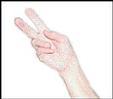
The hands of P.J. Patterson (left) and Edward Seaga.
THE FORTHCOMING general election should provide much fodder for the cynic. Notwith-standing dissenting voices to the contrary, the contest is shaping up to be a straight two-horse race, with the two newer parties, the UPP and the NJA, contributing intellect and rationality but not much voting power to the contest.
If Stone remains correct, Jamaicans will cast their votes presidentially, and so, the election will really be a contest between P.J. Patterson and Edward Seaga. Naturally, the lieutenants on either side will play supporting roles, but Patterson and Seaga will command centre stage.
To some extent, the traditional parties have pitched their early campaign strategies on the assumption that leadership will be decisive. Thus, on the PNP side, Patterson continues to be projected not as the president of the party, but rather as the statesman, the Prime Minister, the leader standing above the fray. Sometimes this has curious results, as was evident in the most ill-advised interview with Jody-Ann Maxwell; but usually it allows Patterson the luxury of garnering much publicity without drawing down funds from the party coffers for advertising.
The Leader of the Opposition is not as well placed strategically. Seaga has far fewer opportunities to present himself as a leader of the entire nation, and not just a the leader of his political party. And, to add to his difficulties, it is clear that the PNP has decided, again, to direct much of its political criticism in Seaga's direction. Some of the criticism is fair enough, and one expects that Seaga, with all his experience, can give as good as he will get. Given, however, that the JLP can only speculate as to the election date, the party's ability to counter anti-Seaga rhetoric may be somewhat stultified.
As to the lieutenants, the PNP currently seems to have a substantial edge on the JLP. Again, this may be the result of advantages available to the incumbent Government in our current electoral system. More specifically, television seems to place much greater emphasis on the activities of Government ministers than it does on opposition spokespersons and shadow ministers.
MINISTERS ABUNDANT
The evidence? Last week, I watched the evening news on Monday, Tuesday and Friday. During that period, I saw news-clips featuring Ministers Peart, Whiteman, Davies, Buchanan, Simpson Miller, Clarke, Paul-well, and Junor; there was certainly no equivalent representation for the JLP spokespersons. Mark you, some of the newsclips of Government ministers were hilarious or revealing: Roger Clarke with his dramatic advertisement for Cable and Wireless and company, Portia Simpson Miller talking to the angels without a cellular; and Peart defending a certain contractor because he is a "comrade".
My observations were not conducted in a scientific manner, but I shall be more careful next week. At this time in the electoral season, both television stations need to be more sensitive to the need for balance: CVM TV is not being fair if they interview Phillip Paulwell twice in one night without offering either the candidates challenging Paulwell, or the spokespersons on industry in the other parties, the opportunity to speak.
So then, it may be that the PNP only seems to have a substantial strategic edge because they have greater access to the media, and the JLP workers are busy in the field. Perhaps, but we should recall that many voters follow perceptions, and may be tempted to the view that the more exposed party is somehow flourishing at the expense of its adversaries.
In the interest of fairness, therefore, the JLP should be encouraged to ensure that its messengers receive "air cover" as a matter of priority. Where, for instance, are Ken Baugh, Pearnel Charles, Mike Henry and Karl Samuda: they, I am confident, would welcome the opportunity to appear on television. Most of the talk shows have apparently accepted the need to have equal representation: the television stations should follow suit in their newscasts.
PEACE AND ORDER
Another question concerns the role of the media in preserving peace during the election period. Needless to say, the media should not encourage disorder or mayhem, but, beyond that, it is unreasonable to expect the media to ignore underlying tensions in particular communities in the hope that silence will cause the tensions to evaporate. With this in mind, the Political Ombudsman, Herro Blair, may have missed the mark last week when he implied that the 'Breakfast Club' was somehow complicit in provoking violence in Spanish Town.
'The Breakfast Club' merely afforded the protagonists (or antagonists) the opportunity to air their different perspectives, and in so doing, allowed others to hear about the situation on the ground in St. Catherine; but, if violence followed the programme, we cannot really know whether the unrest was actually stimulated or reduced by the earlier discussion among the different leaders. Bishop Blair seems to have been proceeding on the logical fallacy post hoc ergo propter hoc.
'Nationwide' was also on the ball last week in a brief discussion concerning the election jingles that have been offered to the public to date. Although the JLP's emphasis on the need for change is fully conveyed by their hymn, Got To Make The Change, they may benefit from tunes with more attention to the rhythm section. In this regard, the PNP's dancehall tune is very catchy, but its concentration on state of perspiration under bus conductor's arms seems designed as a direct insult. The kaiso offerings from both parties are passable, but neither would make an honest top 20 in Jamaica (if we ever have an honest top 20 again).
The high-brow types may be inclined to the view that election tunes are largely irrelevant to political fortunes, but that approach is incorrect. "Rhythm and base" will influence many voters because, again, it creates the perception of a party on the move. Long after the economists had completed splitting hairs on the origins of Jamaica's financial crisis in the 1970s, people remembered, for instance, the Deliverance tune of the JLP, and the My Father Born Ya tune of the PNP. We want our politics to be focused on manifestos and erudite debate, but the practising politician cannot run too far ahead of what the market will bear.
Stephen Vasciannie is a professor at the University of the West Indies.