Contributed photos
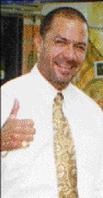
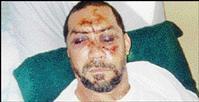
At left, Peter Barrett before his February 4 accident. At right, Barrett with a broken and bruised face and body.Avia Ustanny, Freelance Writer
THE RUSHING night wind was the siren's song beckoning Peter Barrett, until the road became his enemy. Barrett, making his way home on the Castleton main road in St. Mary on his GSXR Suzuki 600 motorcycle was enjoying the ride he had made so frequently in the last five years, when disaster hit. The time was 9:00 o'clock, about two hours or so past sundown on February 4.
Coming into a darkened section of the roadway where the streetlights did not work, he sensed an obstruction. He flicked on the high beam but was already on the rocks -- a monstrous pile of river stones on the left side of the road. He was thrown from his bike head-first.
Lucky to be alive, Barrett was taken by a motorist to the hospital in Annotto Bay. He was transferred later that night to the Kingston Public Hospital where he underwent surgery and spent three and a half weeks. Four more weeks would pass before he could go back to work.
The biker suffered a fractured skull, a broken nose, a break in an eye socket, and one eye fell a quarter of an inch lower than the other. He also broke his upper jawbone in two places and suffered bruises to the left side of his body and a fractured toe. Now he would like to know who will pay for his pain and suffering and the time and money lost. His weekly visits to the doctor continue. He has not eaten solid food in two months, taking his meals from a straw, and his business cannot get his full attention.
Barrett says he wants to know who was responsible for leaving the river stones in the road. When he finds them, they will have to pay for his medical bills, which continue to pile up, he vows. They will also have to compensate him, he adds, for the weeks spent away from his business -- Symmetrical Hair Design, off Constant Spring Road in Kingston.
His medical treatment to date amounts to over $200,000 and climbing. Lost time at his business, he estimates at about $400,000, a figure also climbing.
Barrett's story could be that of anyone who travels the Castleton road at nights, or any other road in the island, for that matter, where public authorities have started repairs, but have not made adequate arrangements to protect the travelling public.
TWO ACCIDENTS IN THE
LAST TWO MONTHS
On Tuesday morning the roar of vehicles slowed to a rumble as they approached the pile of river stones that have reduced the Castleton road from two lanes of traffic to one. A few chains below at the police station they remember Barrett, whose bike was taken there for safekeeping. "Mi see him come in here with him mouth stitch up. If a did me me would a sue," says a worker at the station.
Regulars know how to take precaution, say the police, who note that vehicles need to start blowing their horns from around the corner to indicate their presence to traffic coming from the opposite direction. However, in the dark, and those who are not aware are sometimes unable to react in time and they suffer the consequences, the police say.
There have been two such accidents in the area in the last two months, says District Constable Noel Allen, who adds that stones are also partially blocking several other sections of the roadway in St. Mary.
The stretch of road where Barrett was injured had broken away during last November's flood rains. The boulders were placed there in preparation for repairing the road, says Vando Palmer, Communications Manager for the National Works Agency (NWA) which is responsible for road repairs and rehabilitation.
The boulders have been there for some time, says Mr. Palmer, who explains that "it got to the stage where we decided we weren't going to do the restoration work as an emergency...(so) we pulled back and put the work to tender, which means that it had to go to the Contracts Commission."
The process of tendering takes time, but the tenders are now coming in and will be duly evaluated and awarded, he says. He adds though, that he's unaware of any accident in the area due to the presence of the boulders. In response to the charge that there are no signs warning motorists, Mr. Palmer says he would have the relevant authorities look into the matter.
WHO IS RESPONSIBLE?
In the meantime, Barrett reckons that somebody ought to pay, but isn't sure where to begin.
The negligence of the public authorities in their pursuit of infrastructural repairs is nothing new, says attorney-at-law Eme Usim, who specialises in personal injury cases.
Many Jamaicans, says Usim, are not aware of their rights and do not bother to demand accountability or seek damages when they are hurt or suffer some loss as a result of such negligence. "There is a need for some public education programme in this regard."
The responsible Public Authority could be sued by Barrett for damages as compensation for what he has suffered, the attorney says. "The cause of action, on the face of it, appears to be negligence and also the creation of a public nuisance.
"The public authority owes road users the duty of care, ensuring that obstacles left in the road are removed. Secondly, they have created a public nuisance, as this is a public roadway and they should not put in the road anything that would unduly disrupt public passage."
Any attorney, having established the cause of action in the case, will need to move on to filing a cause of action against the organisation which is directly responsible and, secondly, against the Attorney-General's office which will be a party to any suit filed against the government, he says.
It is Usim's opinion that "There ought to have been signs in the immediate vicinity of the pile of stones, sufficient enough to warn persons that the obstruction was there.
"If the National Works Agency set out to fix the road and for some reason had to abandon it, they should at least render the area reasonably safe before they do so. They cannot leave the area in a condition which will cause harm."
Liability appears to be patently clear, he continues. The state of the road points to negligence of the government body and also to their creation of a nuisance. The attorney says that in his opinion, a quick agreement would be to the benefit of both parties.
"If they agree, the matter can be settled out of court. However, if there is resistance, the issue will have to be adjudicated in the courts." Usually, he said, once negligence has been established a settlement will be forthcoming.
In a case like this, says Palmer, of the NWA, the injured person could write to the NWA's legal officer, bringing the matter to her attention. The letter would need to be accompanied by evidence, including a police report, that the injuries were sustained as a direct result of the stones in the roadway. The matter would then be taken from there, he adds.
WHAT COST, COMPENSATION?
How much could Barrett get for his injuries, pain and suffering? Every case is decided on its own merit. Barrett could sue for special damages, in which case the settlement could rest on the extent of his medical expenses, his loss of earnings during the period, any further surgery needed, and transportation costs to and from the doctor.
He could also sue for general damages. Here, the parties involved would assess the pain and suffering caused. This could be determined by looking at his length of stay in the hospital and whether there is any permanent dis-ability. An action for damages could also be taken in terms of pain and suffering. If the plaintiff also suffers any handicap, he could also sue for being handicapped on the labour market.
If one cannot afford a lawyer to pursue the action, do not worry. Ninety- eight per cent of such cases are done on a percentage basis. Therefore, people who cannot afford a lawyer but do not want to go the way of Legal Aid, should have little difficulty in finding a lawyer willing to work on a contingency basis.
NOTE: The Attorney-General's office, legal adviser to the Government, declined to comment on the issue.


















