WESTERN BUREAU
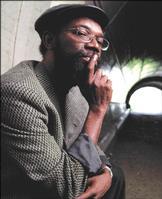
DON'T BE deceived by Beres Hammond's cool profile. The playful smile, the unassuming demeanour, the beard, his trademark cap and spectacles might fool you into forgetting that you're in the presence of an awesome musical talent, Jamaica's greatest practising singer/songwriter.
Beres is one of the three Jamaicans who will make the country proud at the 2002 Air Jamaica Jazz and Blues Festival. He is billed to perform with the fabulously talented Angelique Kidjo and Yolanda Adams on the first night of the festival.
Beres brings the reggae necessary to make this event a truly versatile one. Beres remains the cool operator, though he knows that he's one of a handful of people responsible for maintaining a mighty legacy of soulful music-a select group of artistes like Toots and Gregory Isaacs, like Dennis Brown and Bob Marley.
"Father bless me with a song," he pleads on the last cut of his latest album, 'Music Is Life' "to make the whole world sing a song. Regardless of the race, regardless of the taste." In the year 2002, the blessings just keep coming, and the world is just starting to catch on.
Over the course of his 30-year career, Beres has poured his smoky-sweet voice-an instrument of subtlety and power reminiscent of an Otis Redding or a Teddy Pendergast.
His 1976 album, 'Soul Reggae' to the digital beat of his 1985 dancehall breakthrough, 'What One Dance Can Do' and his 1990, 'A Love Affair' album on Donnavon Germaine's Penthouse label combined his massive repertoire and raised his popularity to higher heights.
Cuts like 'Tempted To Touch' and 'Who Say' with Buju Banton are still as effective in the dancehall today as they were as pre-releases. The 90's proved to be Beres's decade, during which he blazed a trail of modern classics for a variety of producers, from the strugglers' anthem 'Putting Up Resistance' (Tappa) to lovers' laments like 'Come Back Home' (Star Trail) and 'Double Trouble' (Steely & Clevie).